Inspiration Lane
The Italian Villa
Cocciopesto, Impruneta cotto, chestnut beams, hand-forged iron, and the Anglo-Italian villa as a working model.
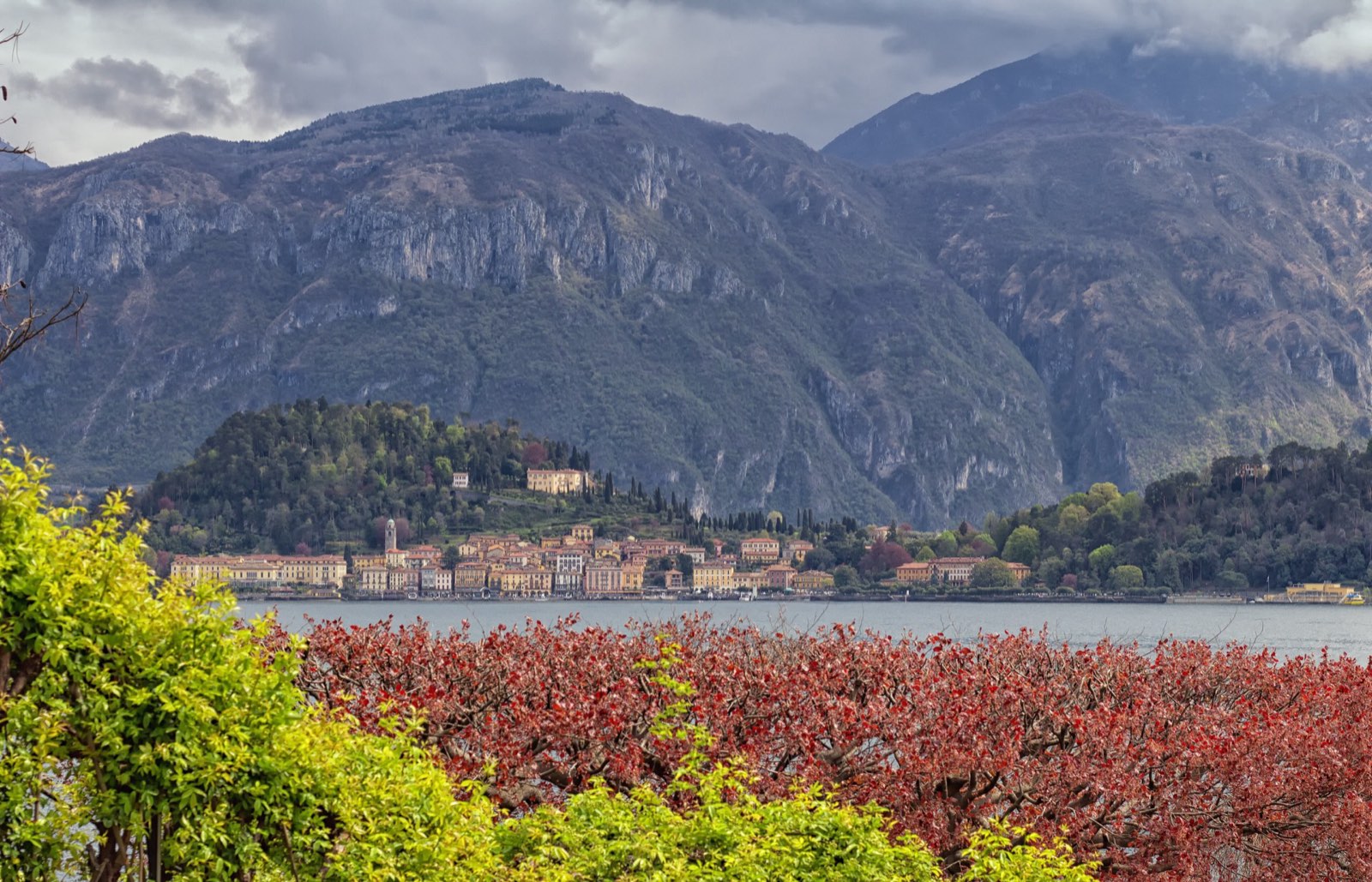
We study the Italian villa as a restoration problem first and a romance second. The villas that matter to our work are the ones still in use as houses or as small hotels run like houses, with farmyards behind them and a chapel up the hill. Castello di Reschio in Umbria, Borgo Santo Pietro south of Siena, Villa Cetinale near Sovicille, La Foce in the Val d'Orcia, Monteverdi at Castiglioncello del Trinoro, the projects Studio Peregalli have done in Lombardy and on Lake Como, and the rooms Axel Vervoordt placed inside Reschio's hotel: these are the references we open before a client meeting. None of them are stage sets. Each one shows what disciplined editing looks like when the original fabric is good enough to keep.
The working canon
Reschio is the most complete recent example: Benedikt Bolza spent twenty-five years restoring a thousand-hectare estate of farmhouses and the eleventh-century castle that anchors them, and the hotel that came out of it is the closest a contemporary practice has come to making restoration legible as a business. Borgo Santo Pietro grew from one ruined Tuscan farmhouse to a working agricultural estate with its own kitchen garden, dairy, and apothecary, and the bedrooms read like rooms in a private house. Villa Cetinale, the late-seventeenth-century Sienese villa Lord Lambton kept in family hands, shows what a country house with a chapel, a hermitage, and a formal Italian garden looks like when it is maintained as a residence rather than a museum. La Foce, Iris Origo's estate above Pienza, demonstrates how Cecil Pinsent's Anglo-Italian garden language can carry a clay-hill landscape across a century. Monteverdi at Castiglioncello del Trinoro is the most recent of these, and the lesson there is restraint at village scale: keep the stone, keep the volume, edit everything else. Peregalli and Vervoordt at Reschio sit in this canon as the interior intelligence the architecture asks for.
Surface and fabric
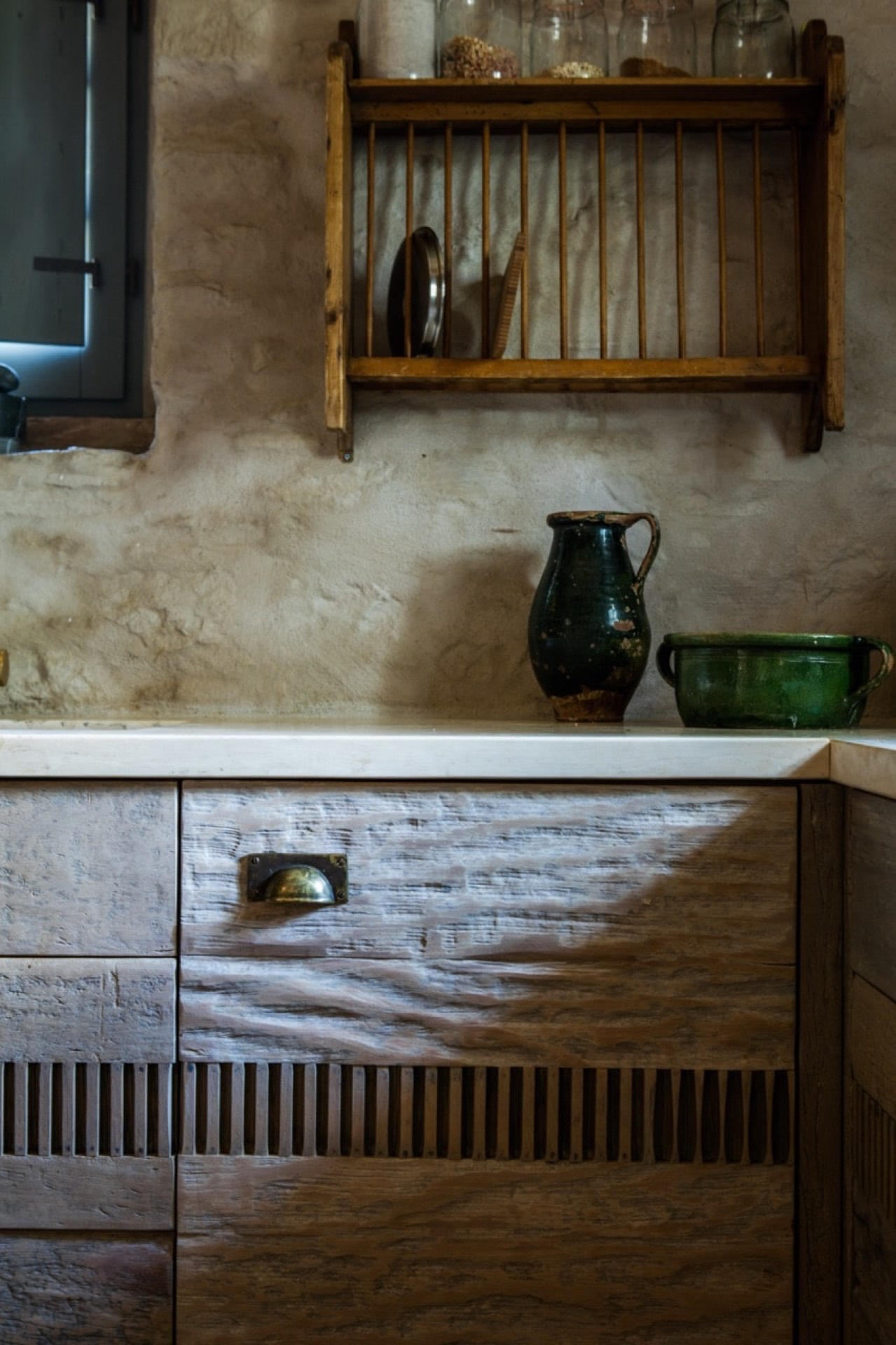
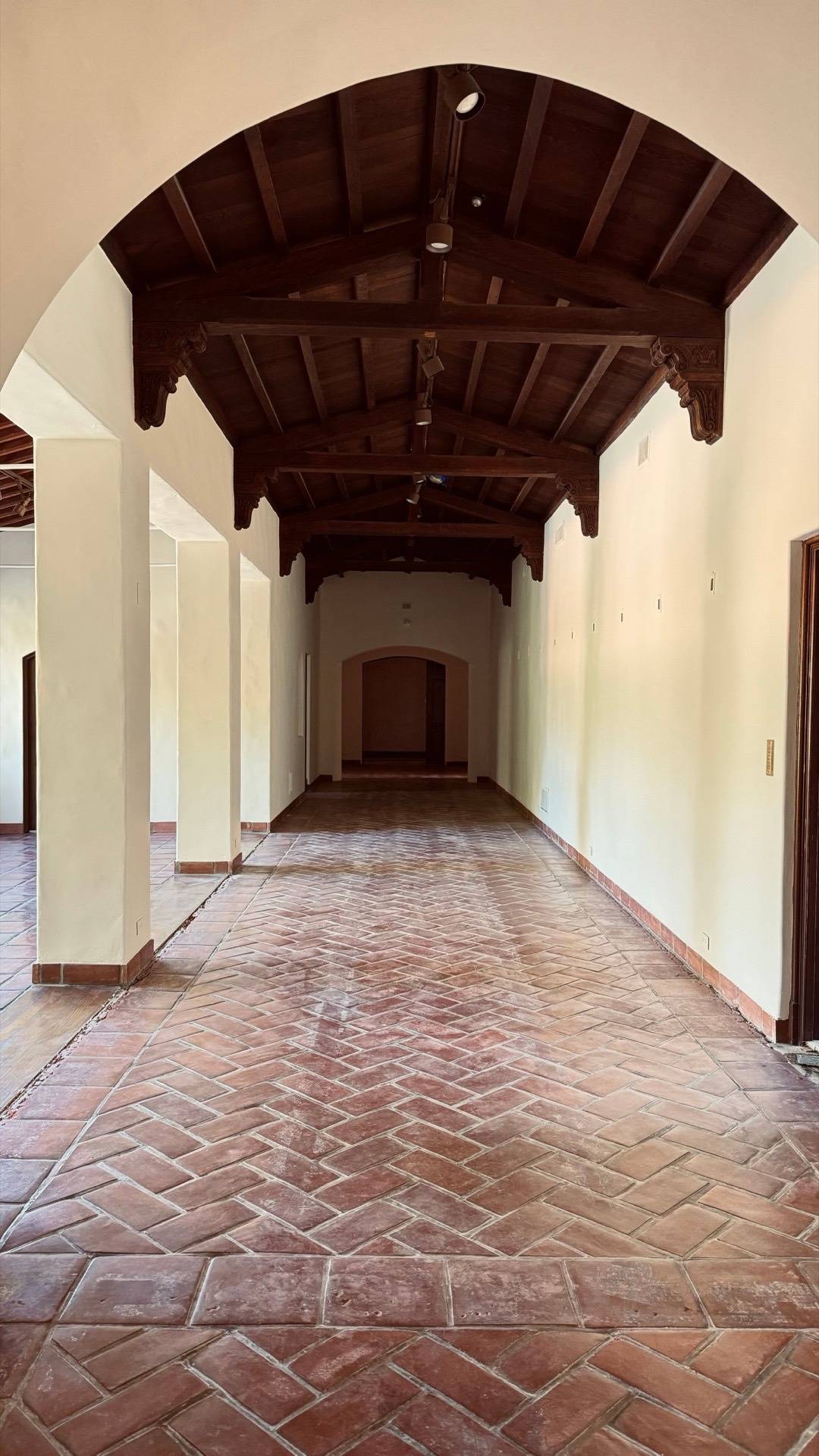
The villas we study share a short list of materials and we work from that list directly. Cocciopesto, the Roman lime-and-crushed-terracotta floor that Vervoordt put back at the center of the conversation at Reschio, gives a warm tonal ground that no contemporary epoxy or microcement can imitate. Hand-troweled lime on the walls, mixed on site over a lime ground and burnished while green, is the only finish that ages correctly under the kind of cross light an Italian villa was built for. Impruneta cotto for the kitchens and loggias, hand-forged iron for hinges, casement stays, and balustrades, chestnut beams left rough and waxed, unlacquered brass for taps and sconces, scagliola for the formal floors where stone would be too heavy. The colors come out of the materials, lime warming to bone, terracotta darkening to oxblood under wax, iron browning out of grey, brass moving toward chestnut over a decade. We specify by workshop, not by sample swatch. A Calacatta from Henraux's Querceta yard reads differently in an Umbrian loggia than a generic Carrara, and we order accordingly.
The room logic
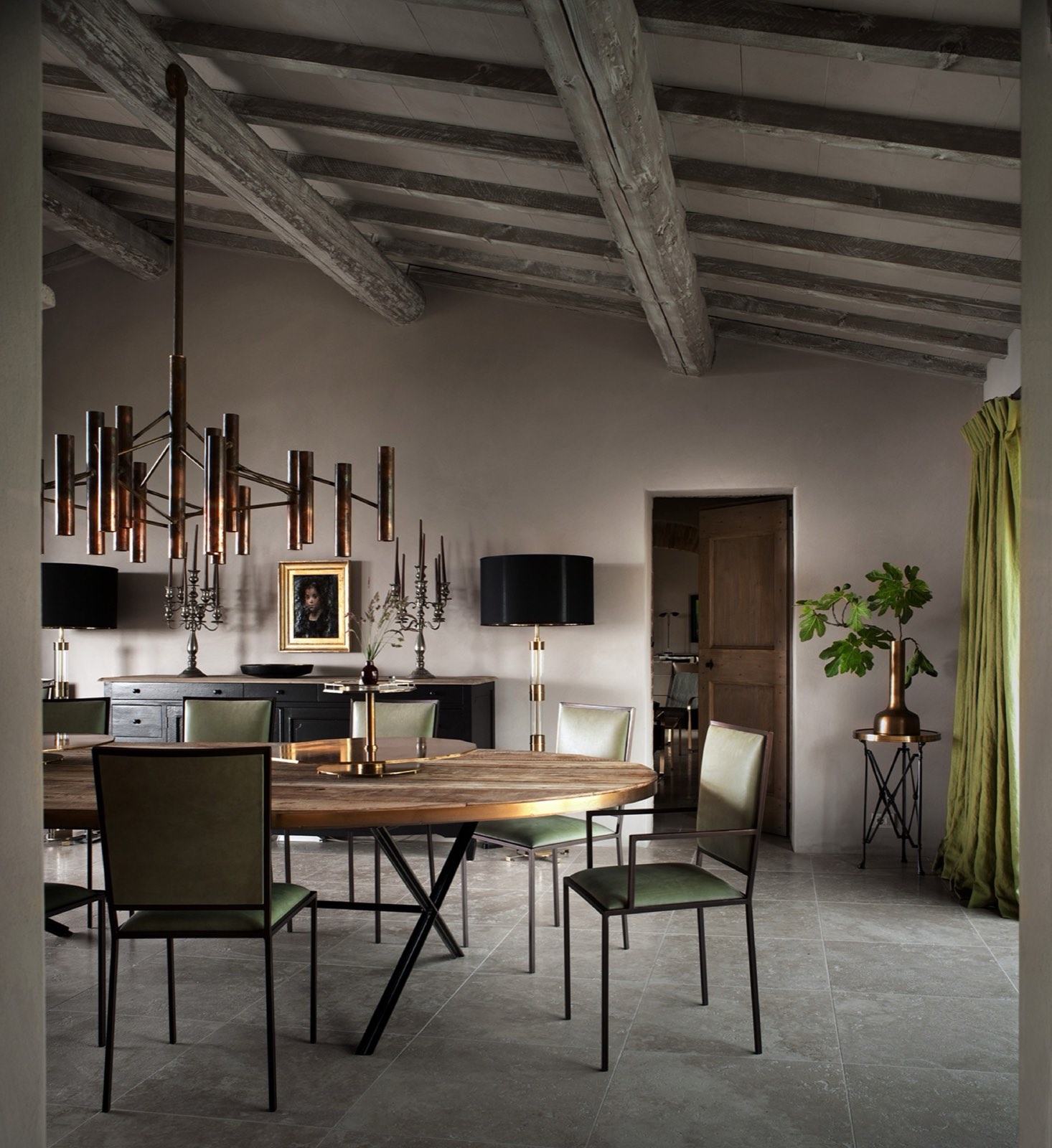
An Italian villa is organized around a few working positions we hold to when we adapt one for a Connecticut hillside or the Hudson Valley. The kitchen is split: a back kitchen for service and prep, a front kitchen that doubles as the room where the family actually sits at the long table. The hearth is the room, not an object inside it, which means the chimneybreast carries the proportions of the wall and the seating is built around it. The boot room sits before the foyer because the house is rural before it is formal. Loggias face the morning light and the loggia floor is one continuous material with the room behind it, so the eye reads outside and inside as one volume. Bedrooms are smaller than American clients first expect, and that smallness is a feature: the volume comes from the bathroom and the dressing room, not from the bed. Studio Peregalli's work at the Villa in Tangier and their Lombard interiors show what happens when this logic is held with discipline across decades.
The Anglo-Italian villa as a working model
We use the Anglo-Italian villa as the working model when a Connecticut client wants the warmth of Tuscany without the costume. The English and American collectors who restored the great Tuscan and Umbrian houses across the twentieth century, Origo at La Foce, Lambton at Cetinale, Cecil Pinsent and Geoffrey Scott as the architects who carried the language, established a precise discipline that survives translation. They kept the Italian fabric and edited it with a Northern hand: comfortable seating, English garden bones around the formal Italian parterre, a working library, deep upholstery, fewer objects on the surfaces. That discipline maps directly onto a Litchfield County stone barn, a Hudson Valley farmhouse, or a Greenwich shingle estate where the client wants Italian warmth without pastiche. Cocciopesto reads as well on a Salisbury hillside as it does in Umbria, provided the lime is laid by the right hand. We bring the masons we trust from northern Italy when the work warrants it, and we train the local crew on the same site.
How a brief begins
When a client arrives with a property near Lake Como, the Val d'Orcia, or a Litchfield estate they want to feel inherited from the Anglo-Italian tradition, we travel to the site and we travel to two or three of the references above. We walk Reschio and Cetinale with a notebook open. We sit in the cocciopesto rooms and feel the wall under a hand. We come back with a short list of materials, a short list of workshops, and a working plan that names every fixed surface by source. The first round is conversation, not deliverable: what does the house already give us, what should we edit hard, what should we leave alone for a generation. Call us at (203) 651-8649 when you have a building and a year of patience.
Cocciopesto and lime
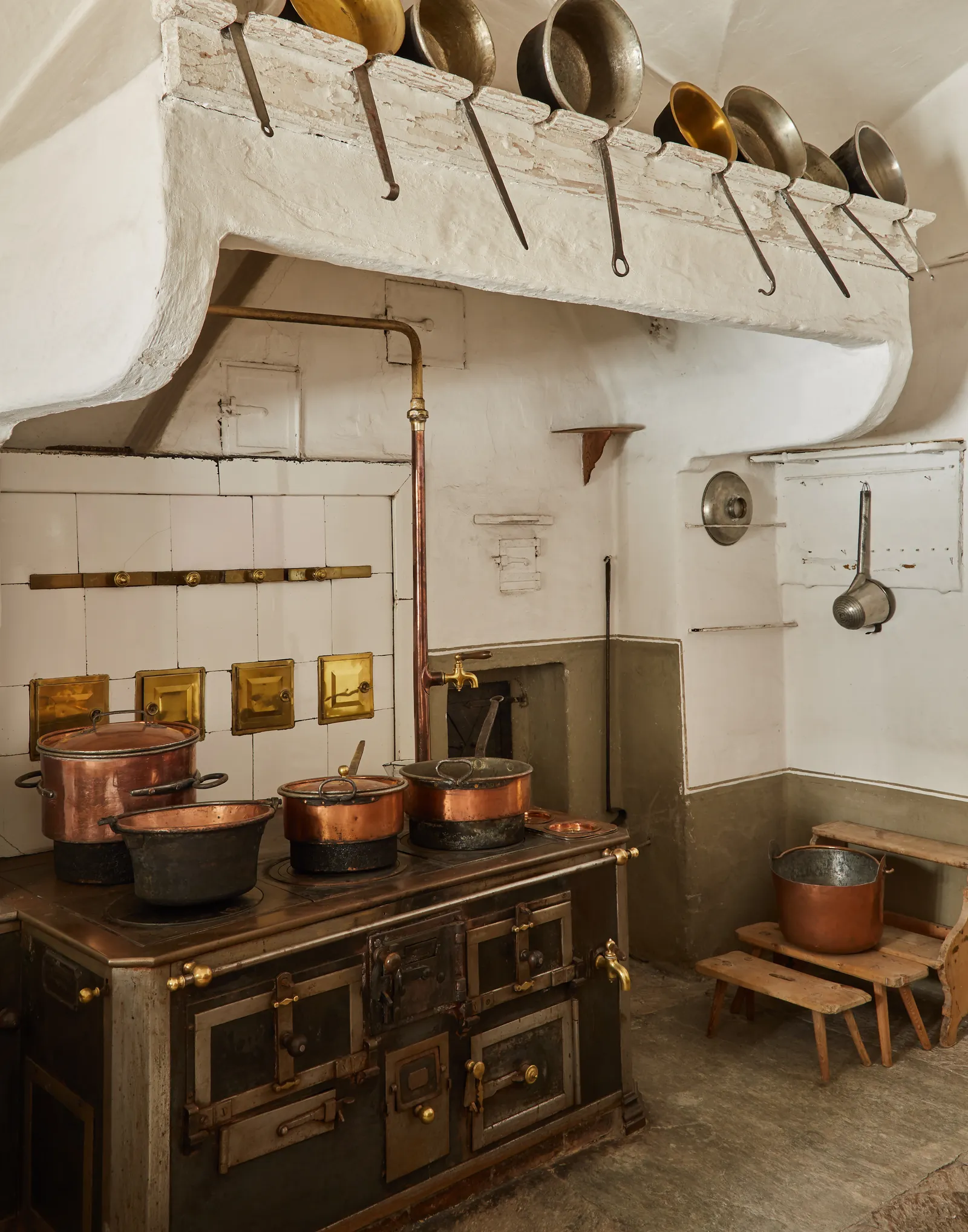
We lay cocciopesto floors mixed on site with crushed Impruneta cotto and slaked lime, burnished by hand while the surface is still green. The walls go up in three coats of hand-troweled lime over a lime ground and finish at a tonal warmth no paint can reach. Vervoordt's rooms at Reschio remain the working reference.
Beams, iron, and brass
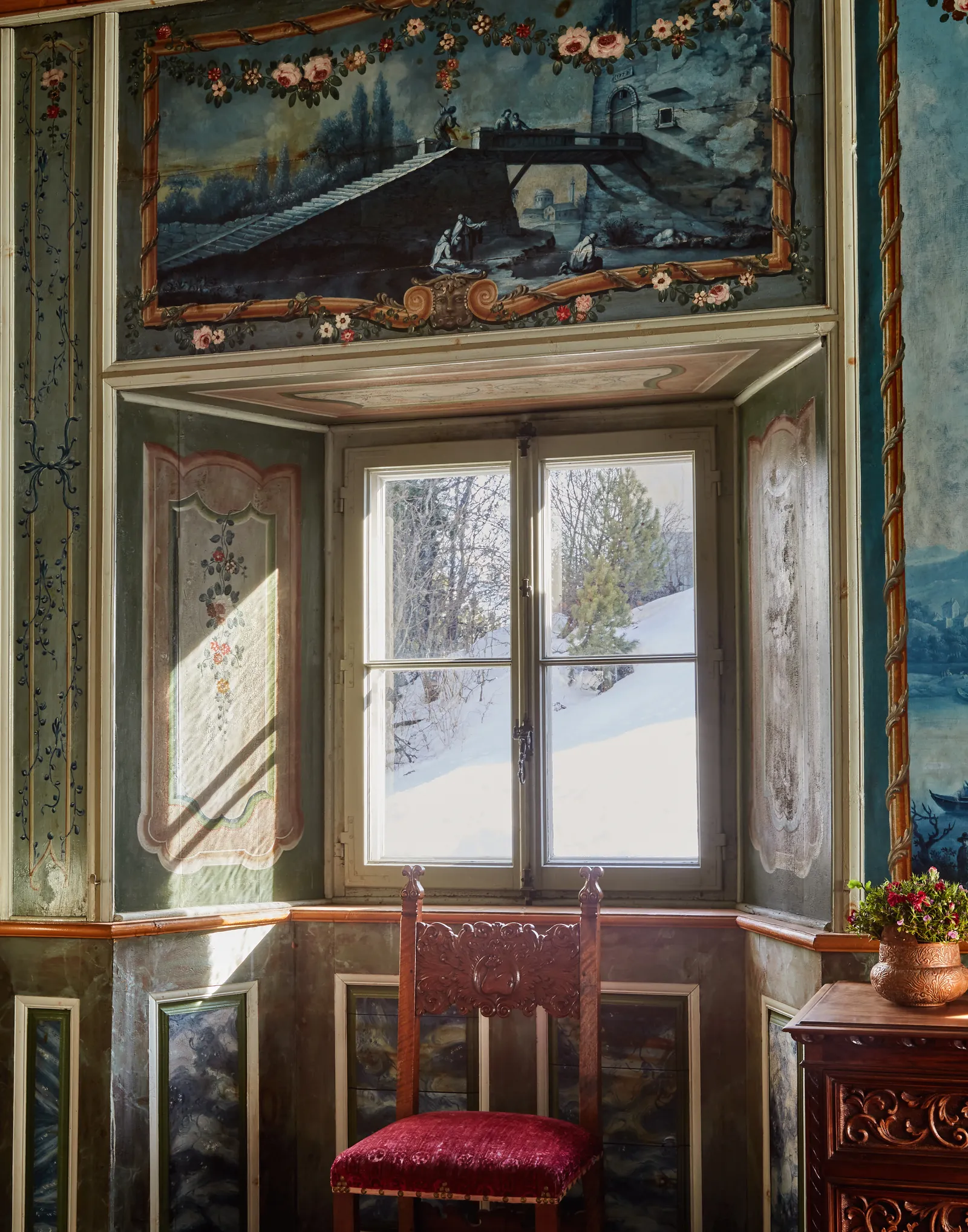
Chestnut beams are left rough and waxed twice, never stained. Hinges, casement stays, and balustrades come from a hand-forging shop we use in northern Italy. Brass is specified unlacquered and patinates from yellow to chestnut over the first decade. The texture of the room comes from these three trades alone.
Loggia and garden bones
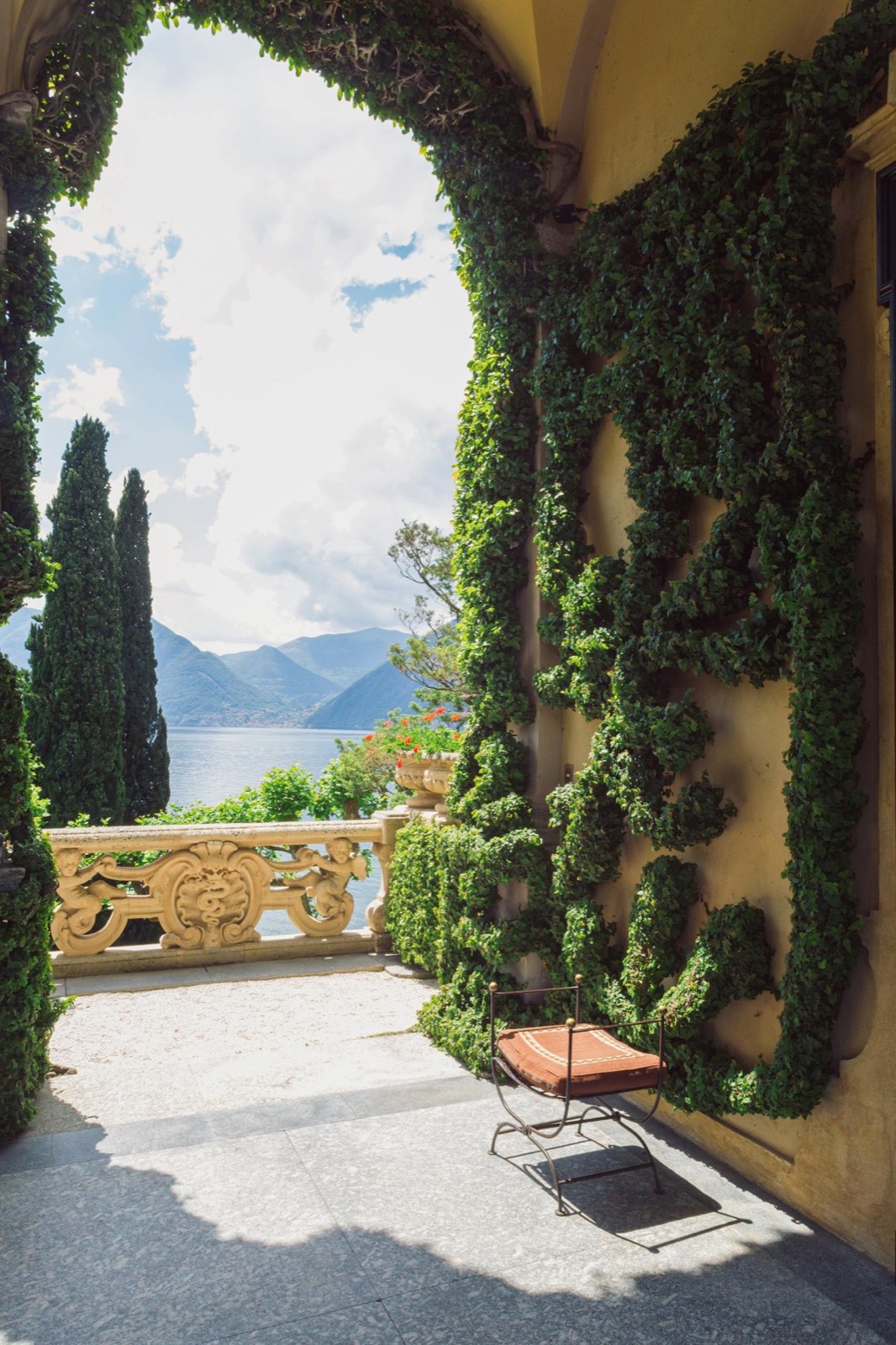
We hold the loggia floor continuous with the room behind it, in Impruneta cotto or in scagliola where the program asks for it. The garden bones follow Pinsent's Anglo-Italian discipline: a formal Italian parterre near the house, an English wilderness beyond, cypress and stone pine for the long sightlines, lavender and rosemary against the wall for the smell at noon.
Fortuny, Rubelli, fresco fragment
Fortuny for one silk lampshade and nothing else, Rubelli for the heavier upholstery weights, Pierre Frey woven linen at the casement. Fresco fragments stabilized by a Restauro-trained Brescia conservator before any plaster touches the wall above them. The conservator is engaged before the architect, not after.
Sources and notes
Castello di Reschio, Umbria
Benedikt Bolza's three-decade Reschio restoration, with Bolza's in-house B Studio carrying the interiors across the hotel. The closest working model for what disciplined Italian villa restoration looks like as a continuing practice.
Borgo Santo Pietro, Tuscany
A working agricultural estate south of Siena restored from a single farmhouse, run as a small hotel with the discipline of a private house.
Villa Cetinale and La Foce
Lord Lambton's Cetinale near Sovicille and Iris Origo's La Foce in the Val d'Orcia, both maintained as residences and both essential to the Anglo-Italian villa tradition that informs our Connecticut work.
Monteverdi, Castiglioncello del Trinoro
The most recent village-scale restoration we cite, useful as a lesson in restraint and in editing fabric to a single working hand.
Studio Peregalli
Roberto Peregalli and Laura Sartori Rimini's Lombard interiors and their work at the Villa in Tangier remain the contemporary canon for how an Italian room should be set.
Bring an Italian villa brief to Chesa.
Send a brief or call the studio. We respond to every serious inquiry within two working days.