Inspiration Lane
Provencal Bastide
Stone, lime, tomettes, and the slow rooms of the Var, the Luberon, and the Cote d Azur.
This lane studies the bastide as a working country house. Thick lime walls, deep window reveals, tomettes hexagonales on a sand bed, parquet de Versailles in French oak, Pierre de Bourgogne in opus romanum, ceramic stoves replaced by stone hearths the size of a child, scagliola panels, antique mirror gone soft. The references we keep open are Yovanovitch at Chateau de Fabregues and La Ferme outside Apt, Festen at Hotel du Couvent in Nice, La Bastide de Capelongue above Bonnieux, Bastide de Marie near Menerbes, Chateau d Estoublon in the Alpilles, and Humbert and Poyet on the villas above Roquebrune and Cap Ferrat. The workshops we name out loud are Salernes for terracotta, Vallabregues and Atelier Vime for rattan, Tarascon for Souleiado, Vallauris and Aubagne for ceramics, Aix and the Var for ironwork and stone, Tassin and Saint-Astier for the lime that holds it all together.
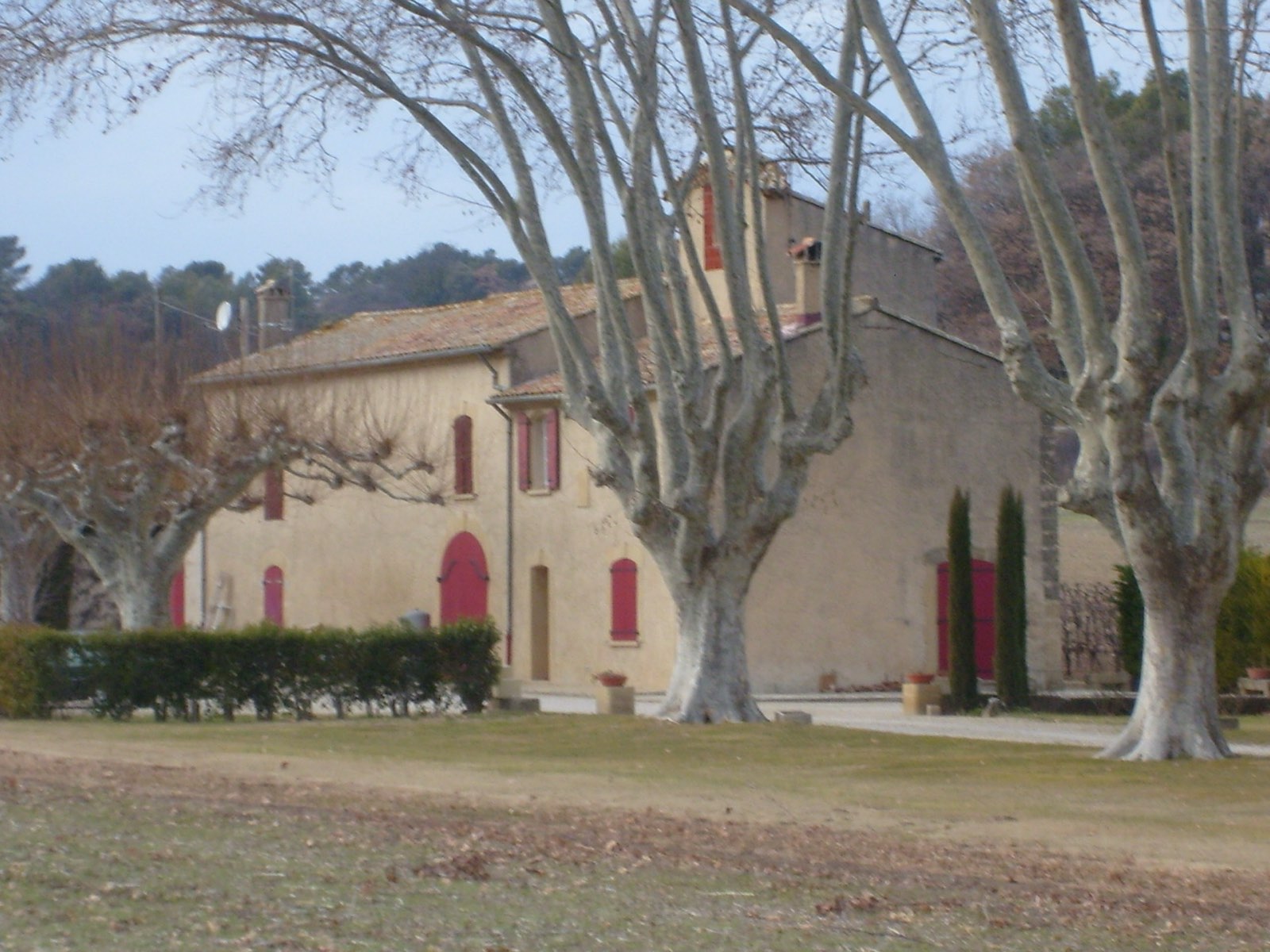
Read the bastide before touching it
A Provencal bastide is a working farm building before it is anything else, with a south face calibrated to August heat, a north face buried in oak, walls in rubble stone bedded in lime, and floor levels that step with the slope. We read it the way Festen read the Hotel du Couvent: walk the rooms before drawings, identify the original hand in the plaster, find the lintels that were already there, mark the joists worth keeping, and edit the later additions hard. The thirty centimeters of accumulated lime on a kitchen wall in the Luberon is the record we are restoring around.
Floors as the first ground
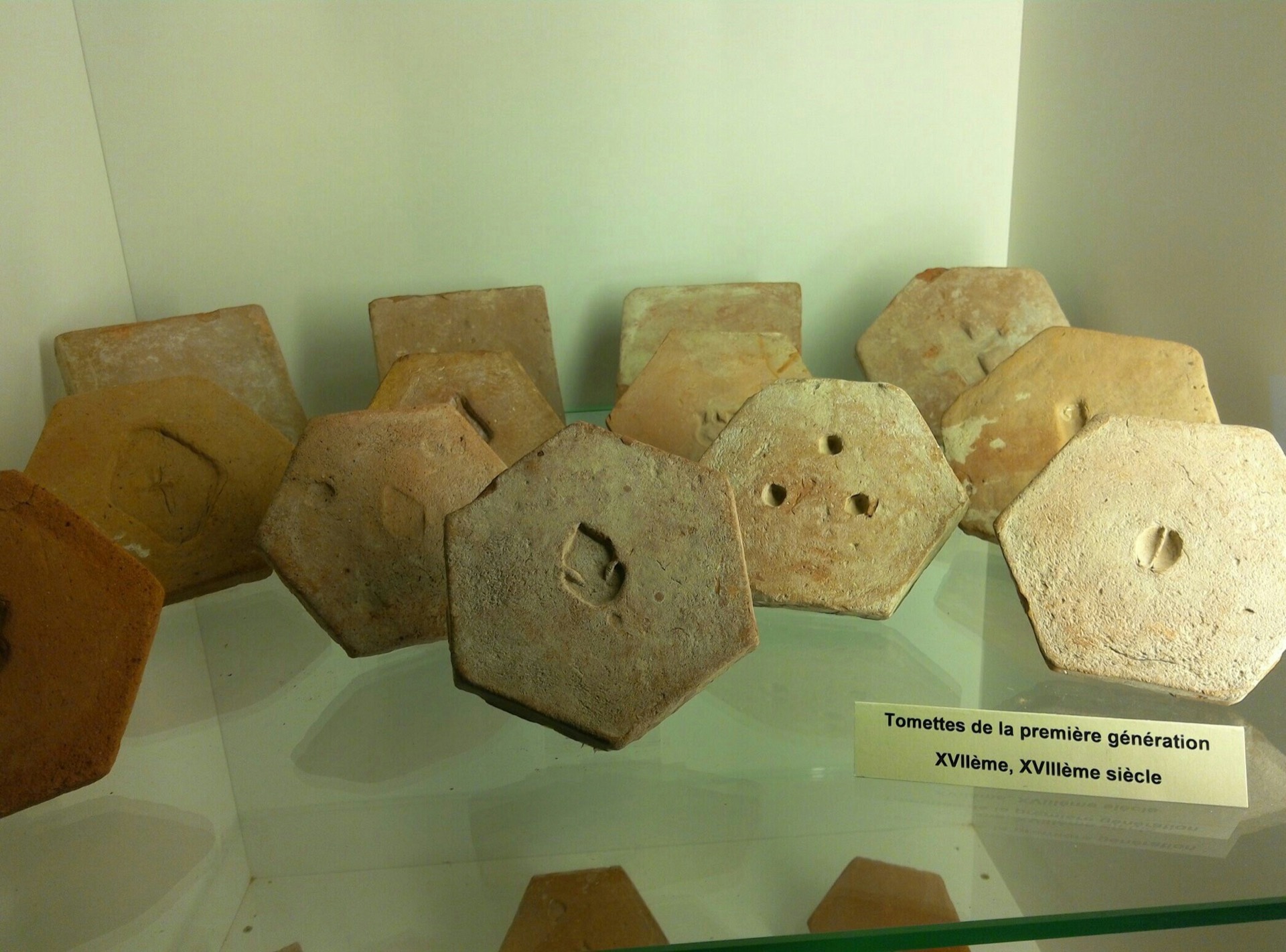
Tomettes hexagonales from Salernes, sixteen by sixteen, laid on a sand bed with a lime grout, are still the right floor for a Provencal kitchen, a ground-floor salon, and any room that opens to a terrace. Where the room asks for a quieter, more formal register we move to Pierre de Bourgogne in opus romanum, large irregular flags with the saw marks left in, set with a five-millimeter joint. Where there is a piano nobile or a salon that earns it, parquet de Versailles in French oak, one meter square panels, fumed and hand-waxed, never sealed. The floor decides the room. We specify it before we specify anything else.
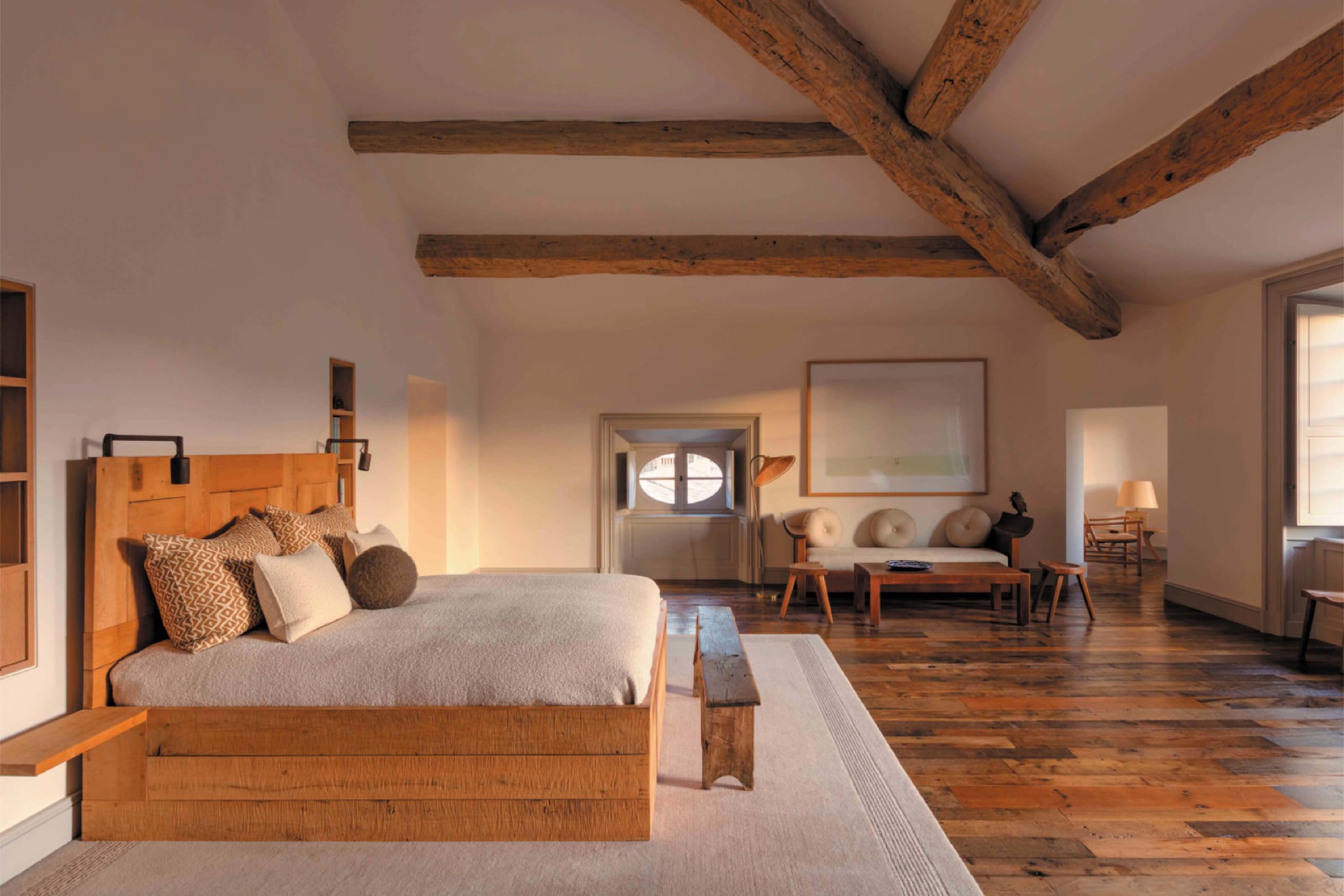
Lime as a system, not a finish
Limewash here is mixed on site over a Saint-Astier ground, applied wet on wet, three to five coats, with the second coat tinted with raw umber, raw sienna, and a touch of black iron oxide so the wall has a warm bone color in winter light and a colder linen in August. The wall is not painted. The wall is built. On the Cote d Azur villas the Humbert and Poyet line of thinking is useful: lime taken slightly cooler, with a Bardiglio or Verde Alpi base, scagliola panels in the entry, antique mirror set into a boiserie, and an unlacquered brass rail at the stair that will go to chestnut by the third winter.
The Cote d Azur register
When the bastide moves toward the coast the discipline tightens. The Festen room at Hotel du Couvent is the working standard: a single ochre limewash, a Pierre de Bourgogne floor, a four-poster in waxed walnut, Belgian linen on the bed, a cane chair from Vallabregues, a single Murano fixture, and nothing else. The Humbert and Poyet villas above Cap Ferrat add stone color: Verde Alpi thresholds, Bardiglio fireplaces, Calacatta only where it earns it, and a Vallauris ceramic lamp on a console of fumed oak. The coast wants fewer objects, harder edges, and a quieter palette than the inland Var.
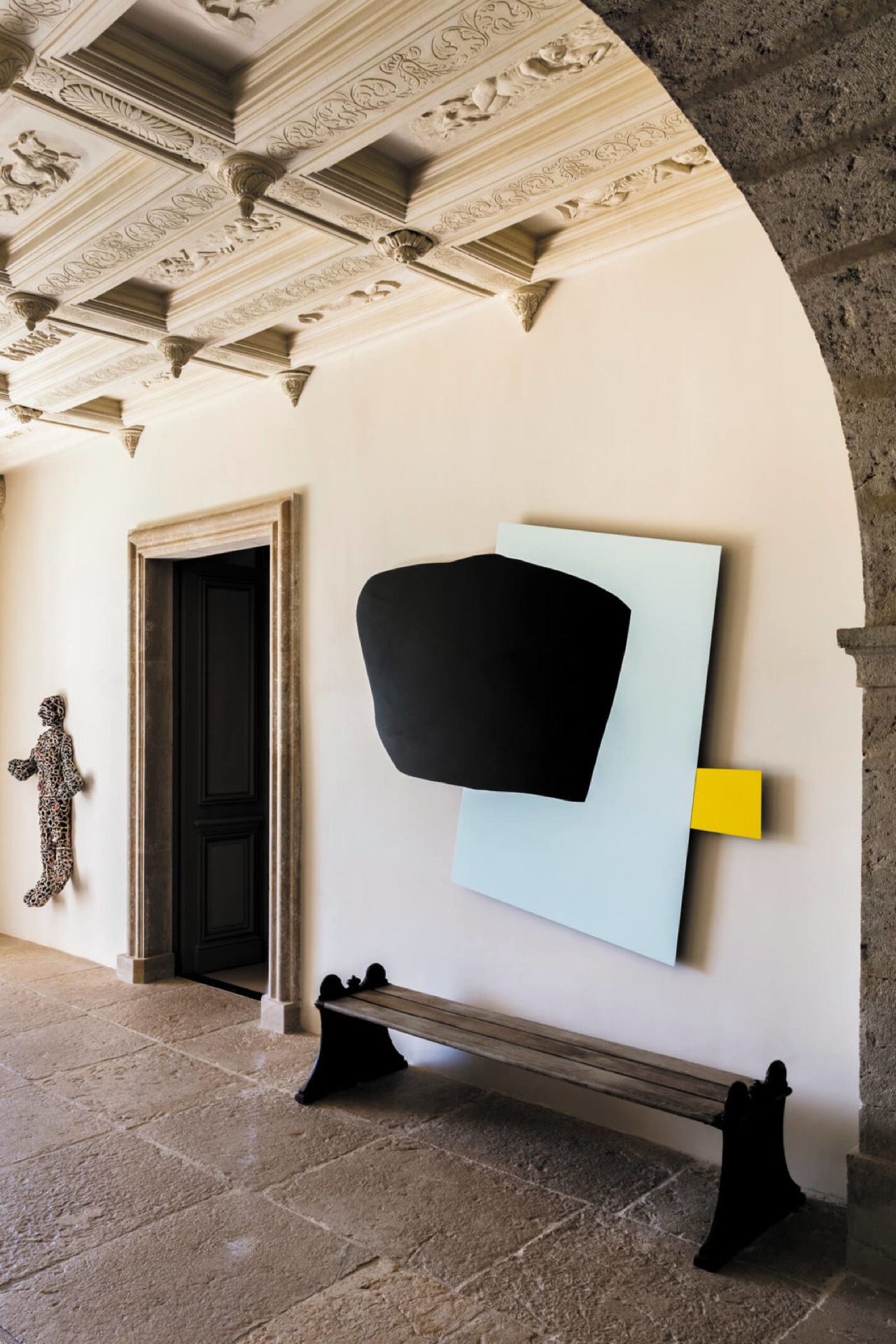
Workshops we name in the spec
Salernes for tomettes and glazed terracotta. Vallabregues and Atelier Vime for rattan and woven seating. Tarascon and Souleiado for the few printed textiles we still use, in the laundry, the pantry, and the children s wing, never in the salon. Vallauris and Aubagne for ceramics and large garden urns. The ironworkers around Aix and Lourmarin for stair rails, gate hardware, and the firescreens. Tassin and Saint-Astier for lime, both as a render and as a mortar for the fieldstone. On the coast we add the Murano houses for glass, the Henraux yard above Carrara for the harder marbles, and a Sommerhuber line of ceramic for the few stoves that move into the Alpine clients houses we run in parallel.
Bringing the lane to a Connecticut hillside
The bastide lane is not confined to Provence. The way a Provencal house sits on the land, the way the kitchen opens to a courtyard, the way the boot room sits before the foyer, the way the hearth is the room, all of it carries into a Litchfield County stone house or a Salisbury farm we are restoring. We translate the floor first: Pierre de Bourgogne in the entry, fumed oak in the salon, tomettes only where they read as honest, never as a costume. The lime comes with us. The brass comes with us. The discipline comes with us. The reference stays Provencal. The house stays Connecticut. To talk through a project in this lane, call the studio at (203) 651-8649.
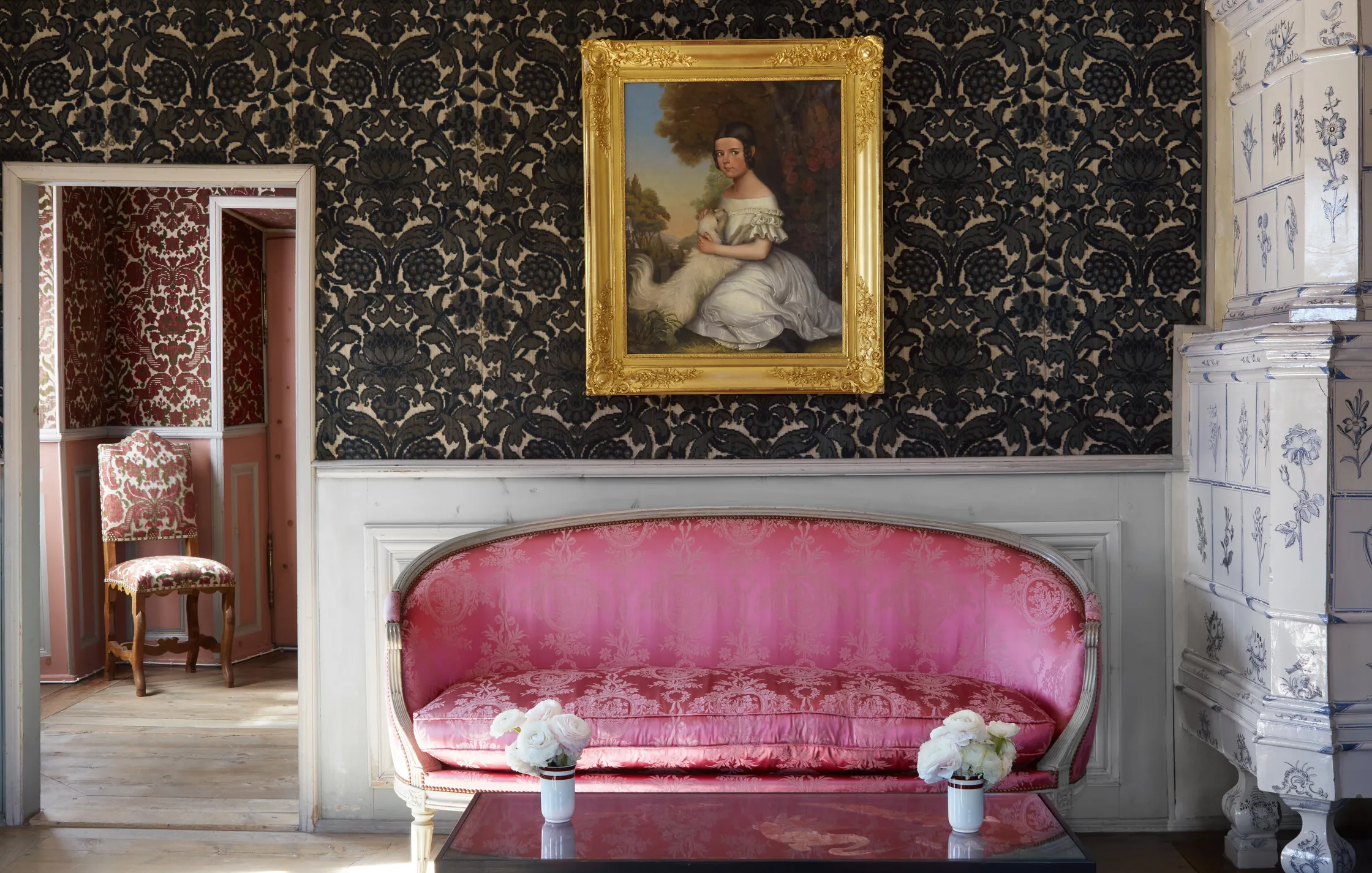
Chateau de Fabregues and La Ferme
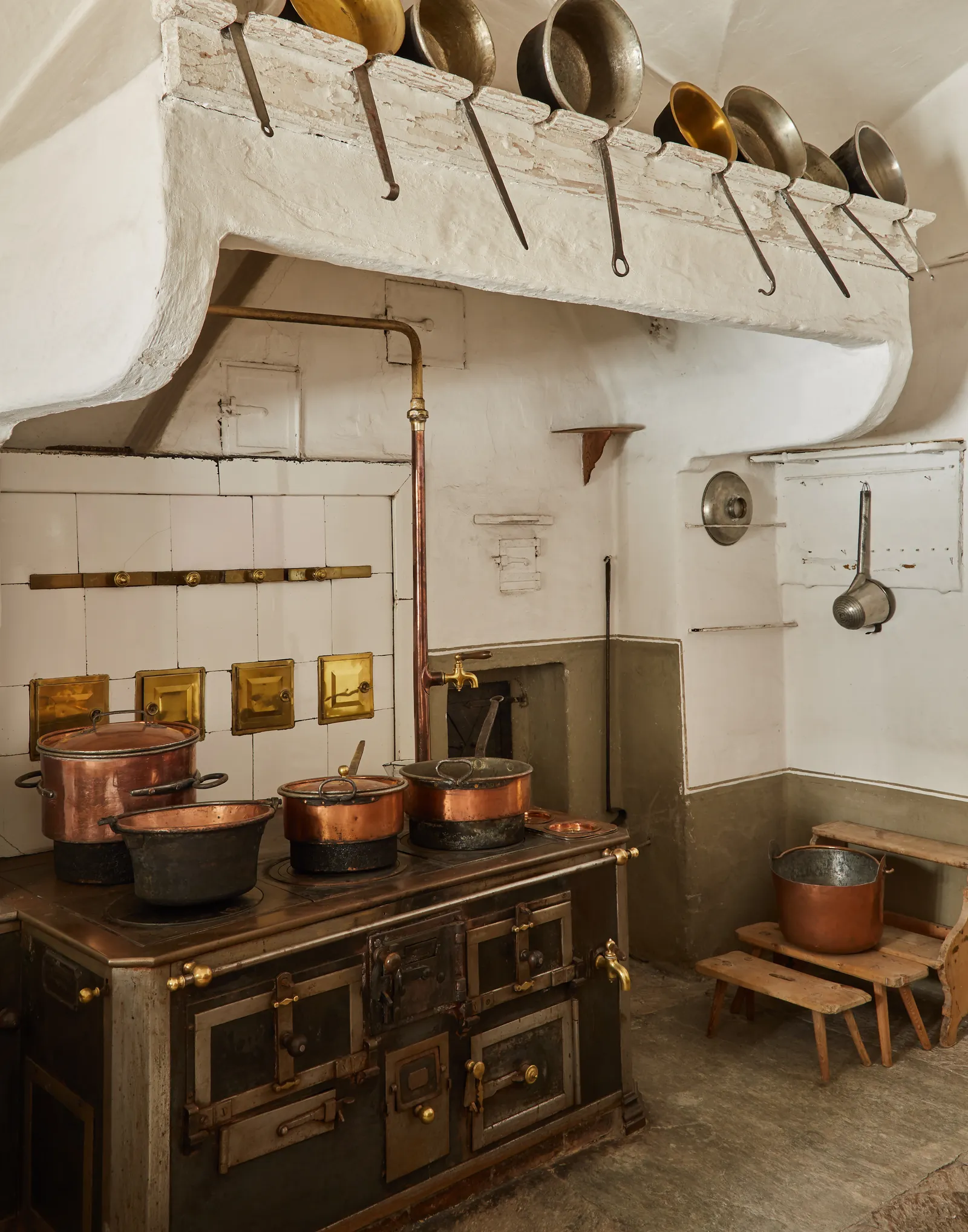
Yovanovitch at Fabregues and La Ferme remains the working anchor: lime walls, tomettes, fumed oak, a single ceramic lamp, and the absence of anything decorative that is not also useful.
Hotel du Couvent, Nice
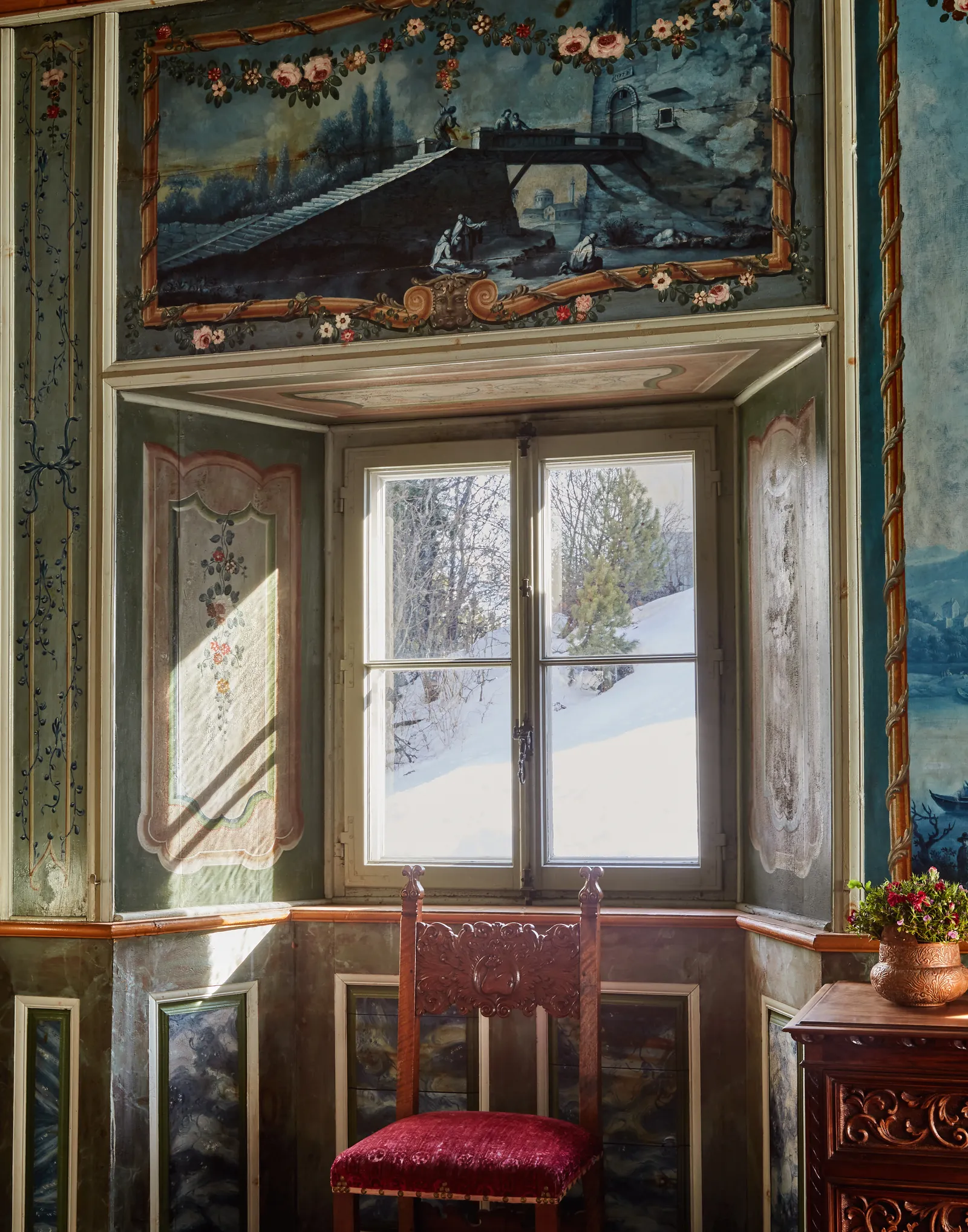
Festen s restoration of the seventeenth-century convent above Nice is the restoration standard for the coast: lime, Pierre de Bourgogne, Belgian linen, Murano glass, and rooms edited to the bone.
Humbert and Poyet villas
On the Cap Ferrat and Roquebrune villas the Humbert and Poyet line gives us scagliola panels, antique mirror set into a boiserie, Bardiglio fireplaces, Verde Alpi thresholds, and a tighter, cooler palette than the inland Var. Lime taken slightly cooler, an unlacquered brass rail at the stair, and a Vallauris ceramic lamp on a console of fumed oak.

Capelongue, Bastide de Marie, Estoublon
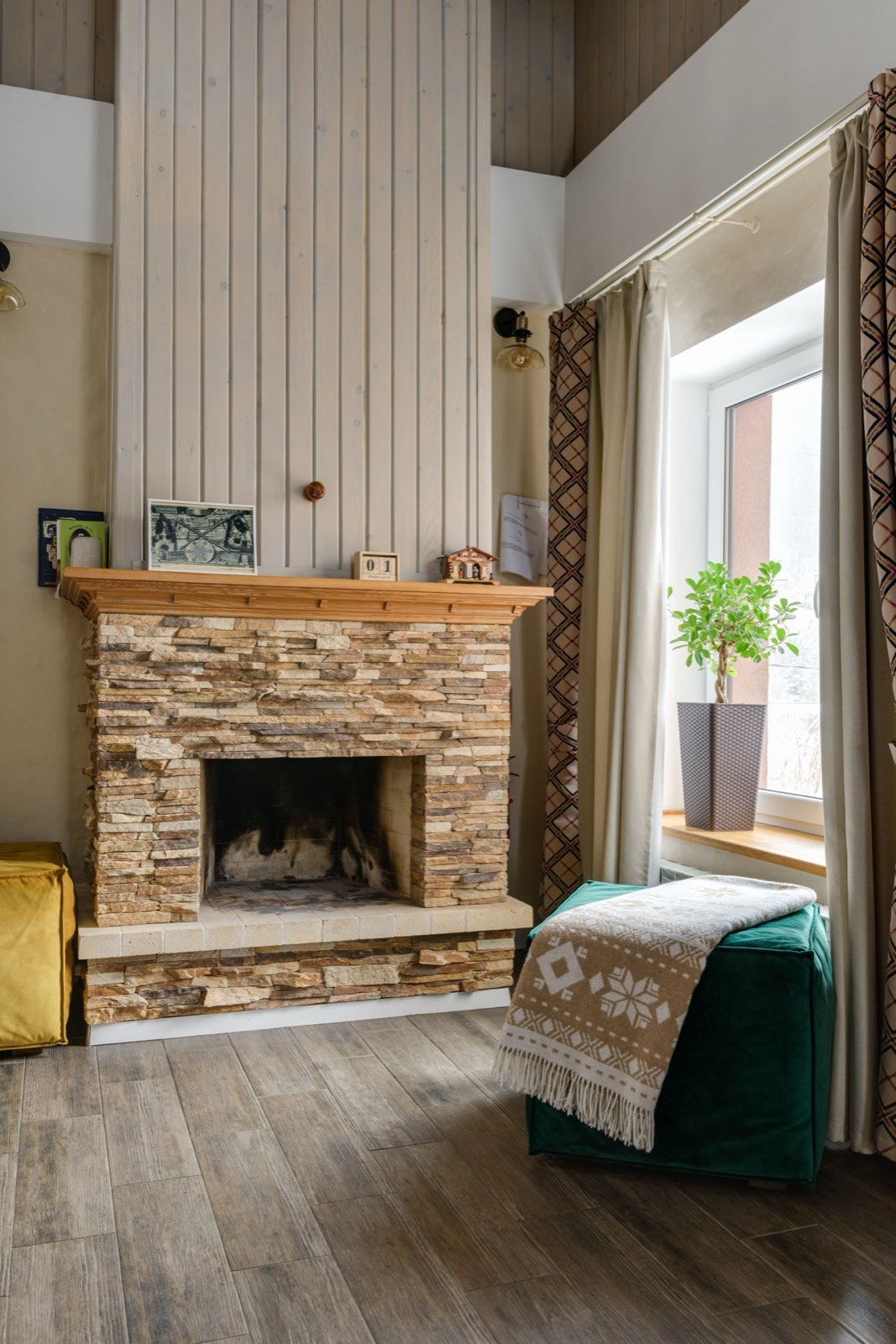
La Bastide de Capelongue above Bonnieux, Bastide de Marie near Menerbes, and Chateau d Estoublon in the Alpilles give us the working country register: stone hearths, sand-bed tomettes, and rooms organized around long tables.
Sources and notes
Working precedents
Chateau de Fabregues and La Ferme (Yovanovitch), Hotel du Couvent (Festen), Cap Ferrat and Roquebrune villas (Humbert and Poyet), La Bastide de Capelongue above Bonnieux, Bastide de Marie, Chateau d Estoublon.
Named workshops
Salernes for tomettes, Vallabregues and Atelier Vime for rattan, Tarascon and Souleiado for textile, Vallauris and Aubagne for ceramics, Aix and the Var for ironwork and stone, Tassin and Saint-Astier for lime.
Material moves
Tomettes hexagonales on a sand bed, lime-washed walls over a Saint-Astier ground, parquet de Versailles in fumed French oak, Pierre de Bourgogne in opus romanum, scagliola panels, antique mirror, unlacquered brass.
Open a Provencal brief.
Send a brief or call the studio. We respond to every serious inquiry within two working days.