Field Note/Arrival Sequence
The Boot Room before the Foyer
Reschio's working answer, carried to a Connecticut hillside.
At Castello di Reschio, the room where reception would sit in a hotel is given to the Boot Room. You step in from the courtyard, and the building puts a fumed oak bench and a row of unlacquered bronze hooks in front of you before it offers a desk or a sofa. We have spent enough time at Reschio to take this as a working position rather than a charming flourish. A serious country house, alpine or Connecticut, is entered through its work. The drawing room is a reward.
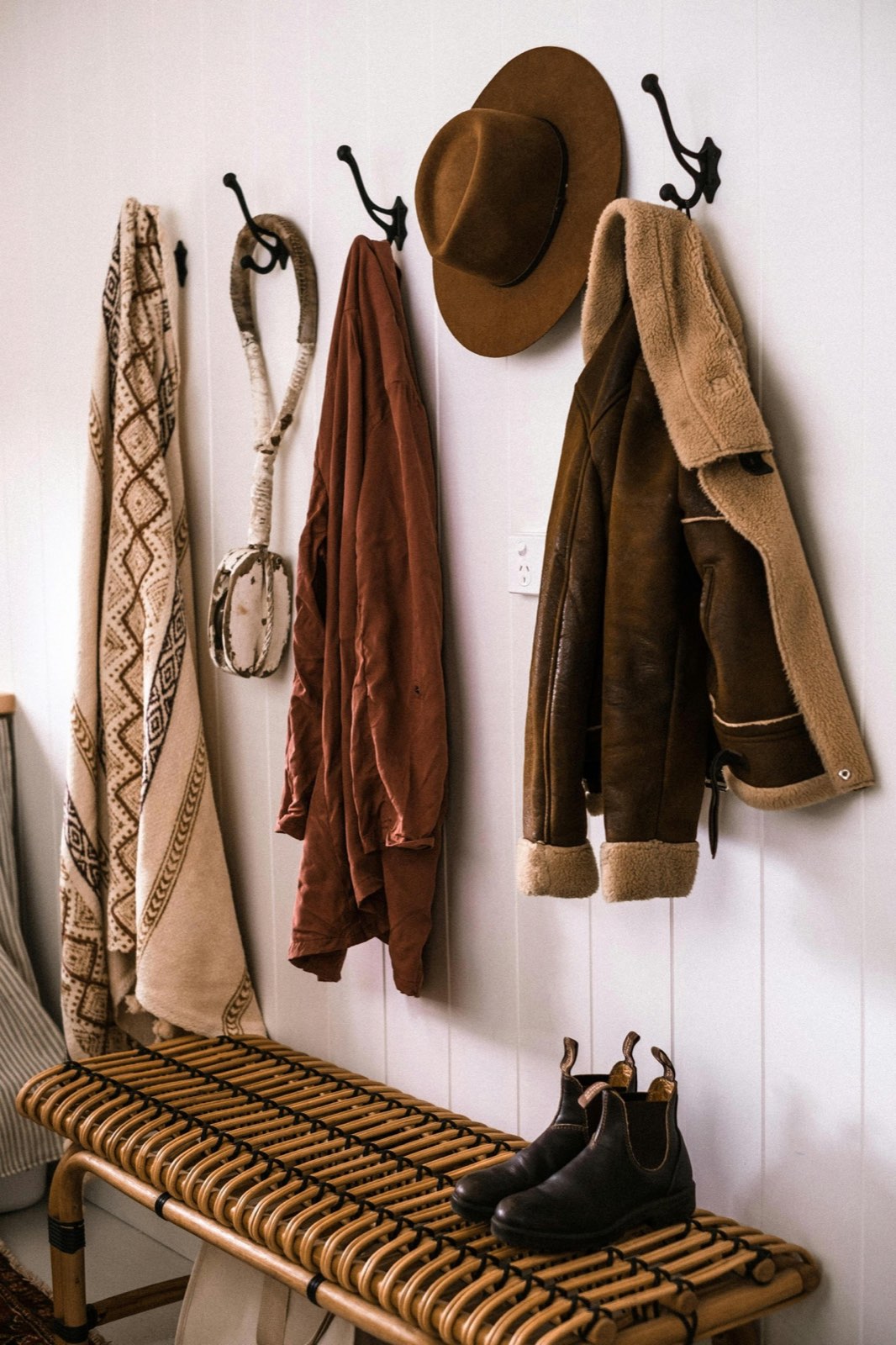
Reschio, the precedent
Benedikt Bolza's choice at Reschio is the cleanest version of the argument. The Boot Room sits where a hotel would put its desk, the cloakroom, and a small library of weather. Tweed jackets, loden capes, riding boots, walking sticks, and a dog leash live there in the open. Terracotta tile from a Tuscan kiln, lime plaster on the walls, fumed oak bench, brass hooks rubbed by guests rather than restored. The room reads as a vestry, not a coatroom, and that is the discipline we carry north.
The Connecticut sequence, in order
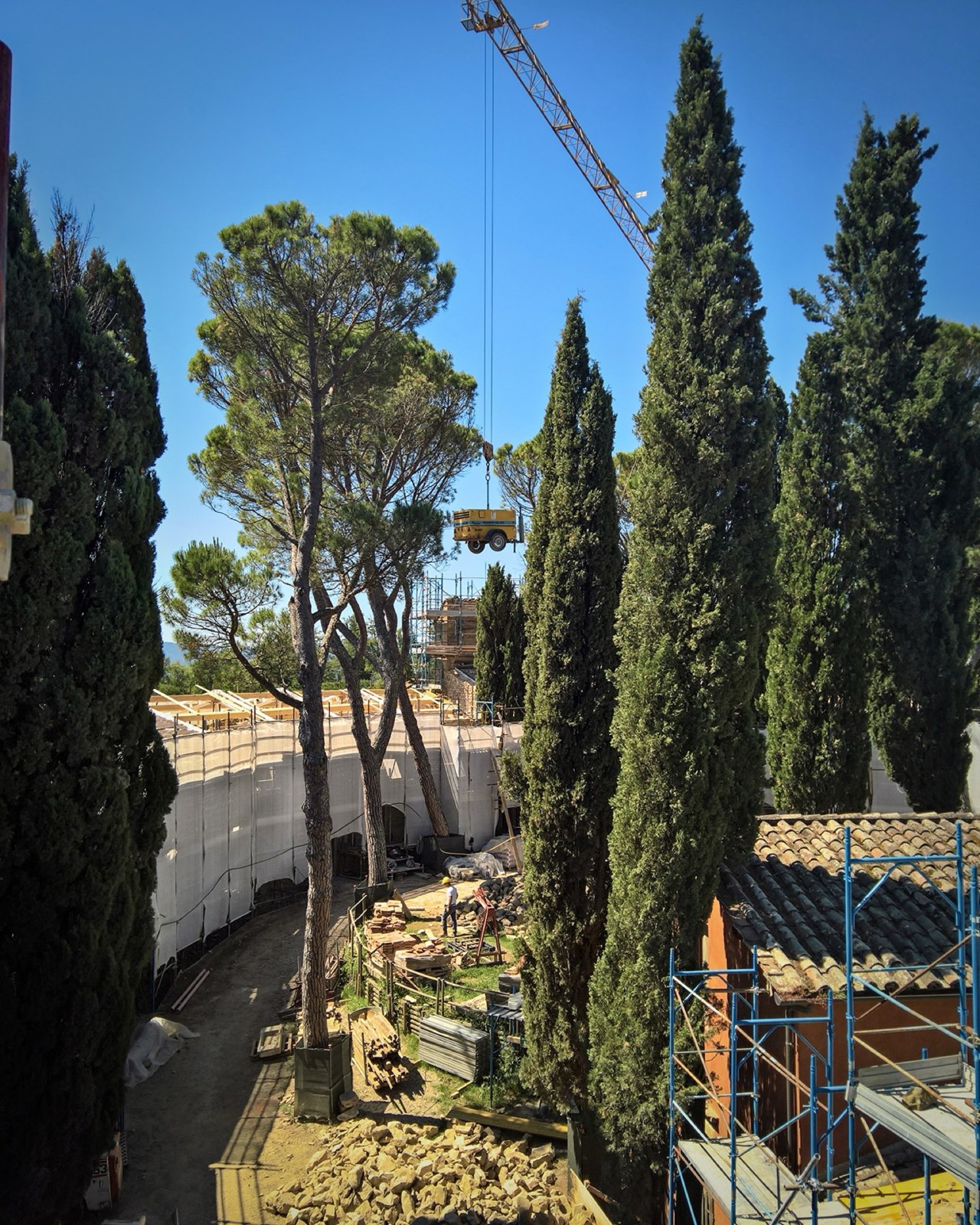
On a Litchfield County hillside the sequence we draw, in plan, runs in five rooms before you reach a foyer. First, the parking court in gravel and lichen-stained granite, sized for three cars and the farrier's truck. Second, a covered loggia in fieldstone with a long fumed oak bench under it, deep enough to pull a riding boot. Third, a coat hall, six feet wide, lit from a single clerestory, with a run of unlacquered bronze hooks and a hat shelf in chestnut. Fourth, a ski and rod rack room with louvered French oak doors, vented to the eave. Fifth, the mudroom proper: heated terracotta brick floor laid herringbone over a hydronic slab, a centered linear drain in patinated bronze, a slop sink in soapstone, a dog wash in honed Bardiglio. Then, and only then, the foyer.
Why this order works in a working country house
In Greenwich, in Salisbury, in New Canaan, the houses we work on hold equestrian programs, ski weekends in Stowe, fly fishing in the Housatonic, mud season, and three dogs. A foyer placed first becomes a damaged room within two winters. Moved back, the foyer can do what a foyer should do, which is hold a console, a painting, and a stair. The boot room takes the weather, the salt, the leather, the smell of horse and wet wool. The hierarchy reads correctly in any serious country house: the working hand of the house meets you before the family room does.
Material vocabulary, named
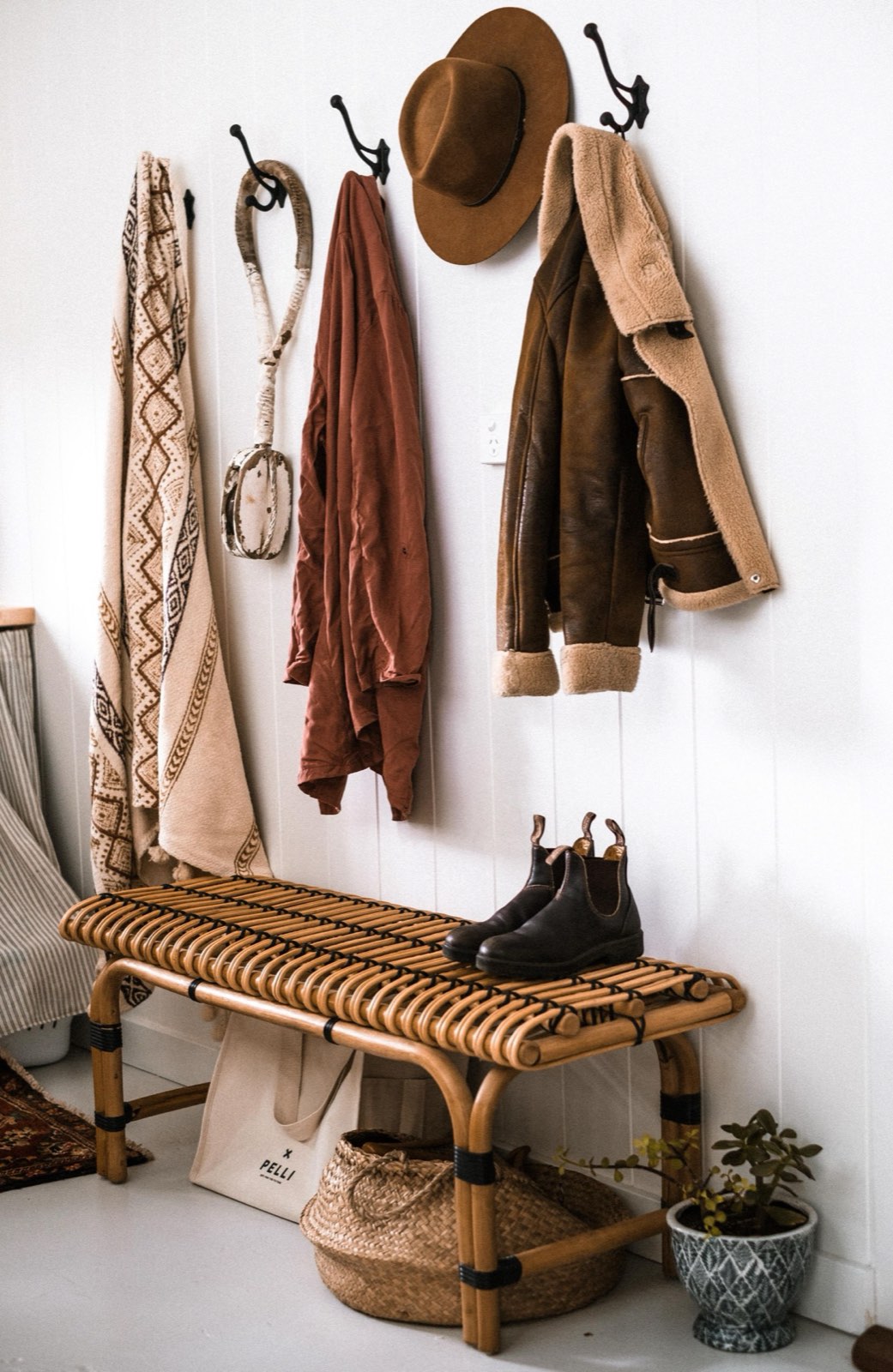
Floor: terracotta brick from Salernes or Impruneta, fired dark, laid in herringbone over a hydronic slab with a centered linear drain. Walls: hand-troweled lime over a lime ground, warmed with a trace of yellow ochre so winter light reads bone rather than blue. Bench: fumed oak from a single trunk, wax finished, with a chestnut shoe shelf beneath. Hooks: unlacquered bronze, hand forged in a small Connecticut shop, set on a fieldstone wall laid in lime mortar, with the joints raked rather than pointed. Lighting: a single hand blown opaline pendant, one wall lantern in patinated brass. The room costs less than the foyer it replaces, and it ages faster, which is the point.
A note on dimensions
We draw the boot room at a minimum of nine feet wide and fourteen feet long, with a clear seven feet of bench. The coat hall in front of it stays narrow on purpose, six feet, so the eye is pulled through. The mudroom holds at least four full lockers for a family of four plus weekend staff, each twenty inches wide, each with a vented base for wet boots. The dog wash is set at twenty-eight inches from finished floor, with a hand spray on a brass swing arm. None of this is decorative. It is the spec that lets the rest of the house stay clean.
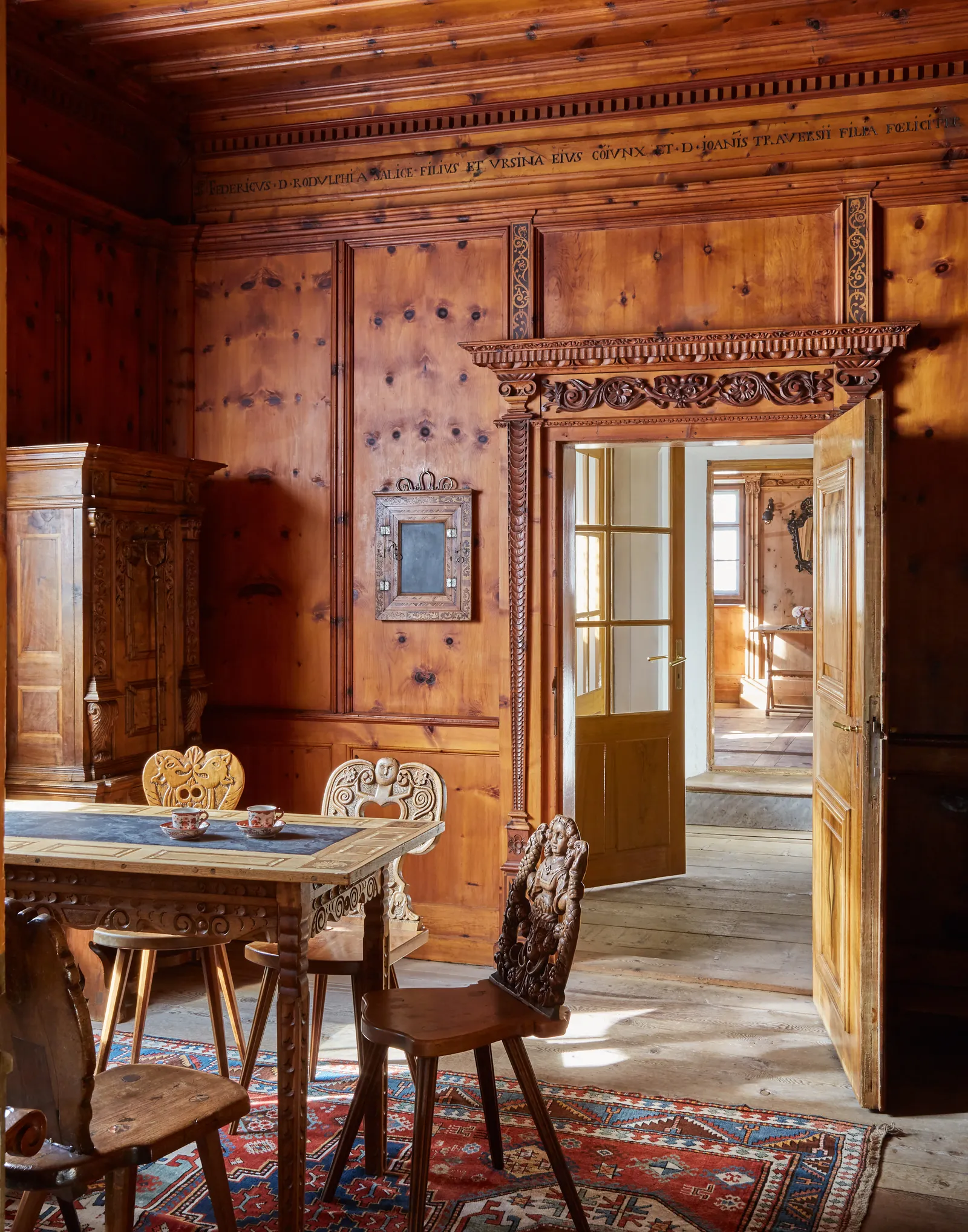
Reschio, the room before reception
Castello di Reschio in Umbria places its Boot Room where a hotel would normally site the desk. The cue is unmistakable: serious country houses are entered through the work, not the welcome.

Litchfield County, the loggia bench
A covered loggia in fieldstone, a fumed oak bench under it, gravel and granite at the door. The first room of a Salisbury farmhouse before the coat hall begins.
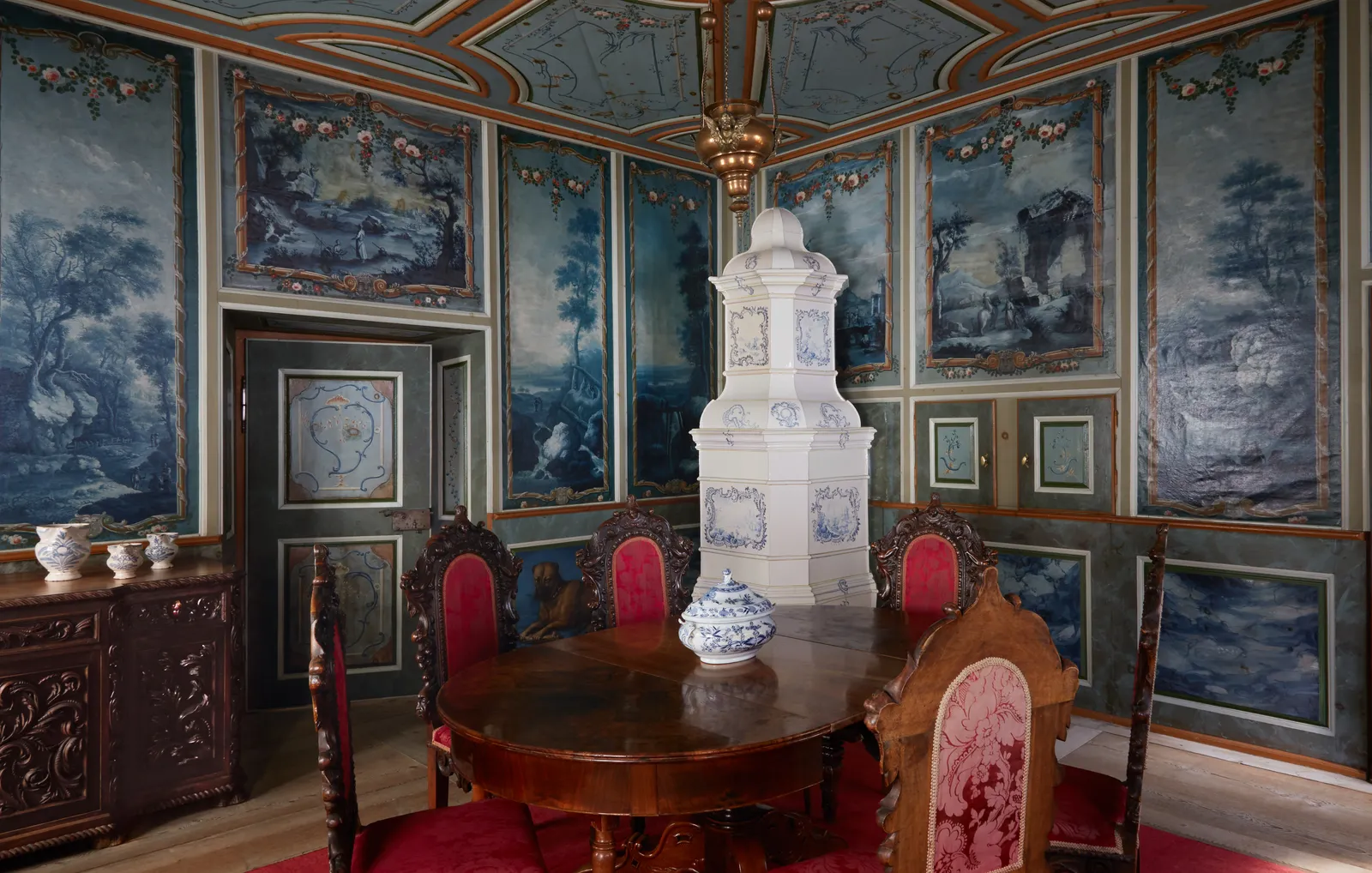
Mudroom, with drain and dog wash
Heated terracotta in herringbone, a centered linear drain in patinated bronze, a honed Bardiglio dog wash, lime on the walls. The room is built to be wet.
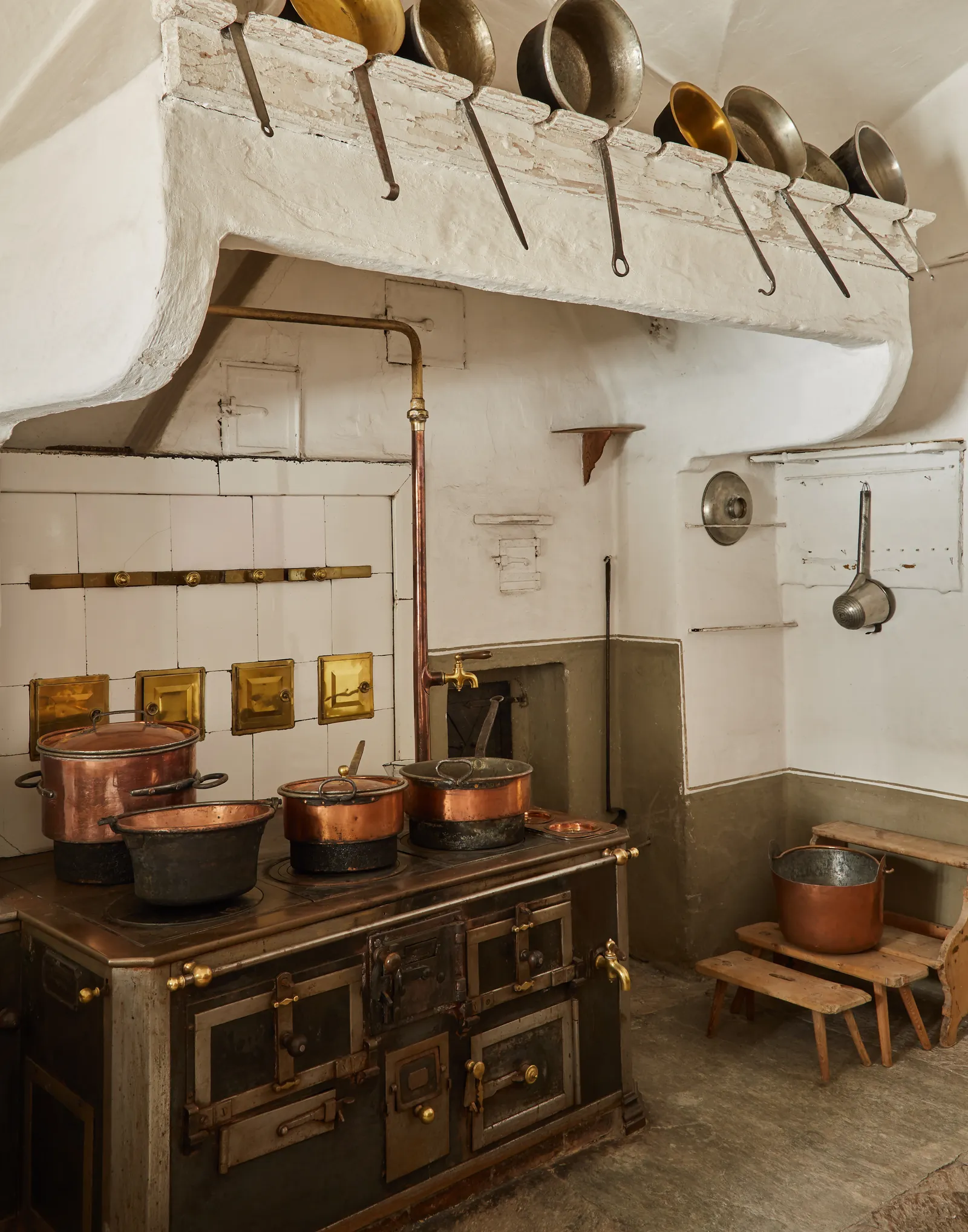
Coat hall, six feet wide
Unlacquered bronze hooks on a fieldstone wall laid in lime mortar, a chestnut hat shelf, a clerestory above. Narrow on purpose, so the eye travels through to the foyer beyond.
Sources and notes
Castello di Reschio, Umbria
Benedikt Bolza's twenty-year restoration of the estate, and the Boot Room placed where a hotel would site its reception, remain the clearest working precedent for arrival sequence.
Hans-Jorg Ruch, Engadin
Ruch's restorations in Zuoz, Guarda, and Ftan keep the entry sustal as the working hand of the chasa, with the stua and the family rooms held back from the door.
Festen, Hotel du Couvent
Festen Architecture's edit at Hotel du Couvent in Nice treats the threshold as program, not decor, and reads the building before placing the first new line.
Call to walk a Litchfield site.
Send a brief or call the studio. We respond to every serious inquiry within two working days.