Field Note/Heat And Mass
The Kachelofen in Connecticut
Specifying a floor-to-ceiling ceramic stove for a Litchfield County house.
A kachelofen is the heating gesture that lets a Connecticut country house read as if it has been heated this way for three generations. It is a floor-to-ceiling masonry stove faced in hand-glazed ceramic tile, often two and a half meters tall, sometimes built into a corner or used as a partition between kitchen and sitting room. It burns two or three logs a day, holds heat for ten to twenty hours through the ceramic body and the masonry core, and gives off a slow radiant warmth that sits on the skin and the back of a wool chair. We have specified them for restorations for years. We now specify them for new construction in Litchfield County and Greenwich, because no forced-air system, no radiant slab, and no wood-burning insert produces the same atmosphere in the room.
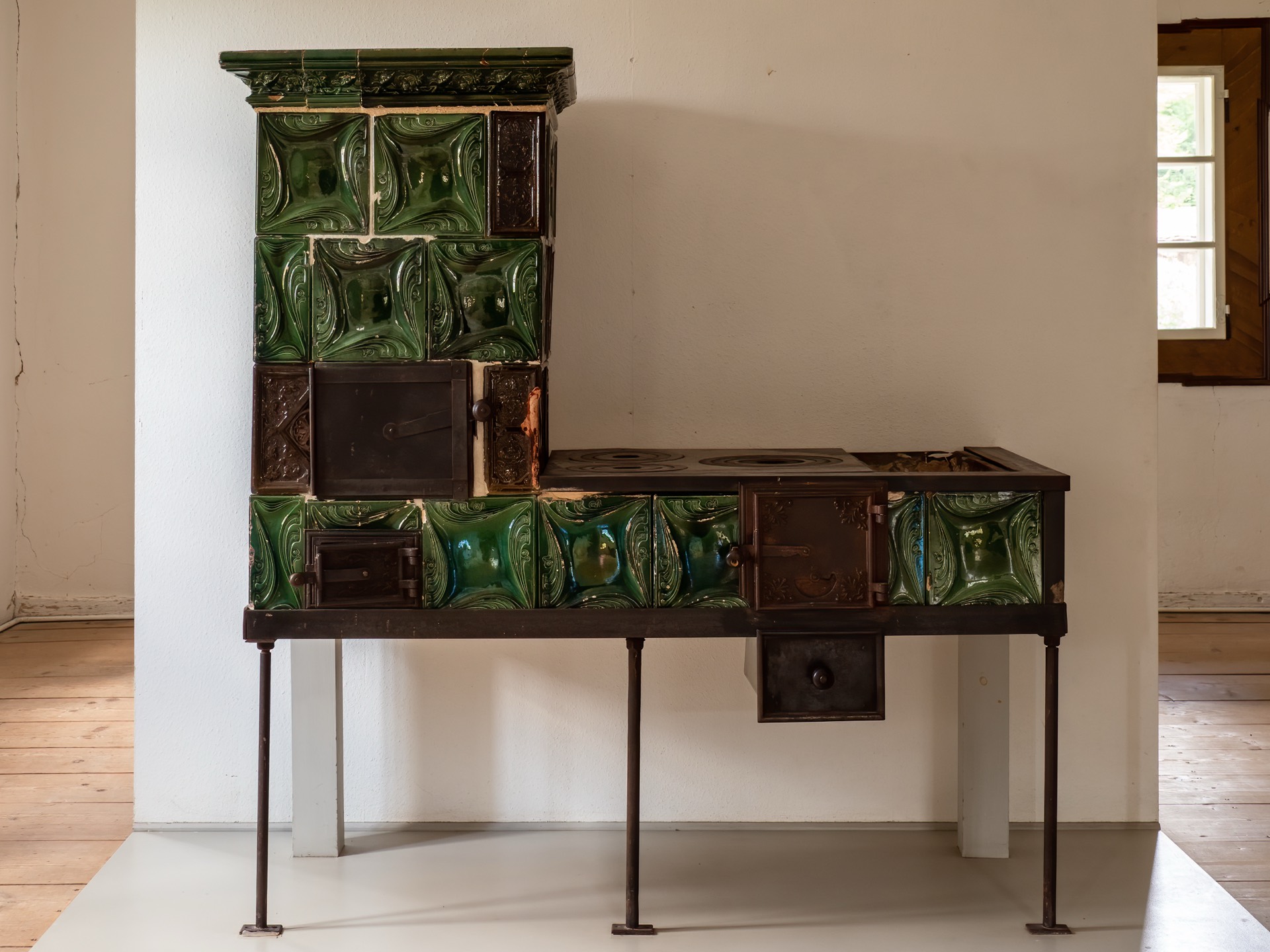
What it actually is
A kachelofen is a masonry heater faced in kacheln, hand-glazed ceramic tiles set in a continuous skin from floor to ceiling. The body holds a firebox, a refractory core, and a network of internal flue passages, sometimes called a Grundofen smoke labyrinth, that pulls heat out of the gases before they reach the chimney. The fire is short and hot, an hour and a half, two hours at most. The mass then radiates for the rest of the day. Sommerhuber, the Austrian house in Steyr, has been pressing and glazing these tiles since 1491, and most of the kachelofen work we ship to a Connecticut site arrives in their cases, palletized by elevation, numbered by course, with the corner tiles separated. A Sommerhuber-faced stove in a Greenwich house weighs between two and four tons by the time the stone bench is set.
Why forced-air does not produce this
Forced-air heating raises the temperature of a volume of air and circulates it. The room reads warm at the thermostat and cool at the wall. A radiant slab gets you closer because the floor itself becomes the radiator, but the heat is uniform, anonymous, and silent, and the room still reads as a mechanically conditioned space. A kachelofen radiates from a single mass at long wavelength, the way a sun-warmed stone wall radiates at dusk. The body of the stove is between forty and sixty degrees Celsius on the surface, never hot enough to scorch a wool throw left against it, and the radiant field reaches into the seated zone of the room without moving air. A sitting room with a Tonwerk T-Top set against the chimney wall feels eight degrees warmer to a guest in a chair than the wall thermometer reports. The Swiss firm in Lotzwil sizes their cores to the room volume and the daily fuel target, and the spec sheet they issue lists kilowatt-hours stored, not BTU per hour, because the design assumption is mass, not flow.
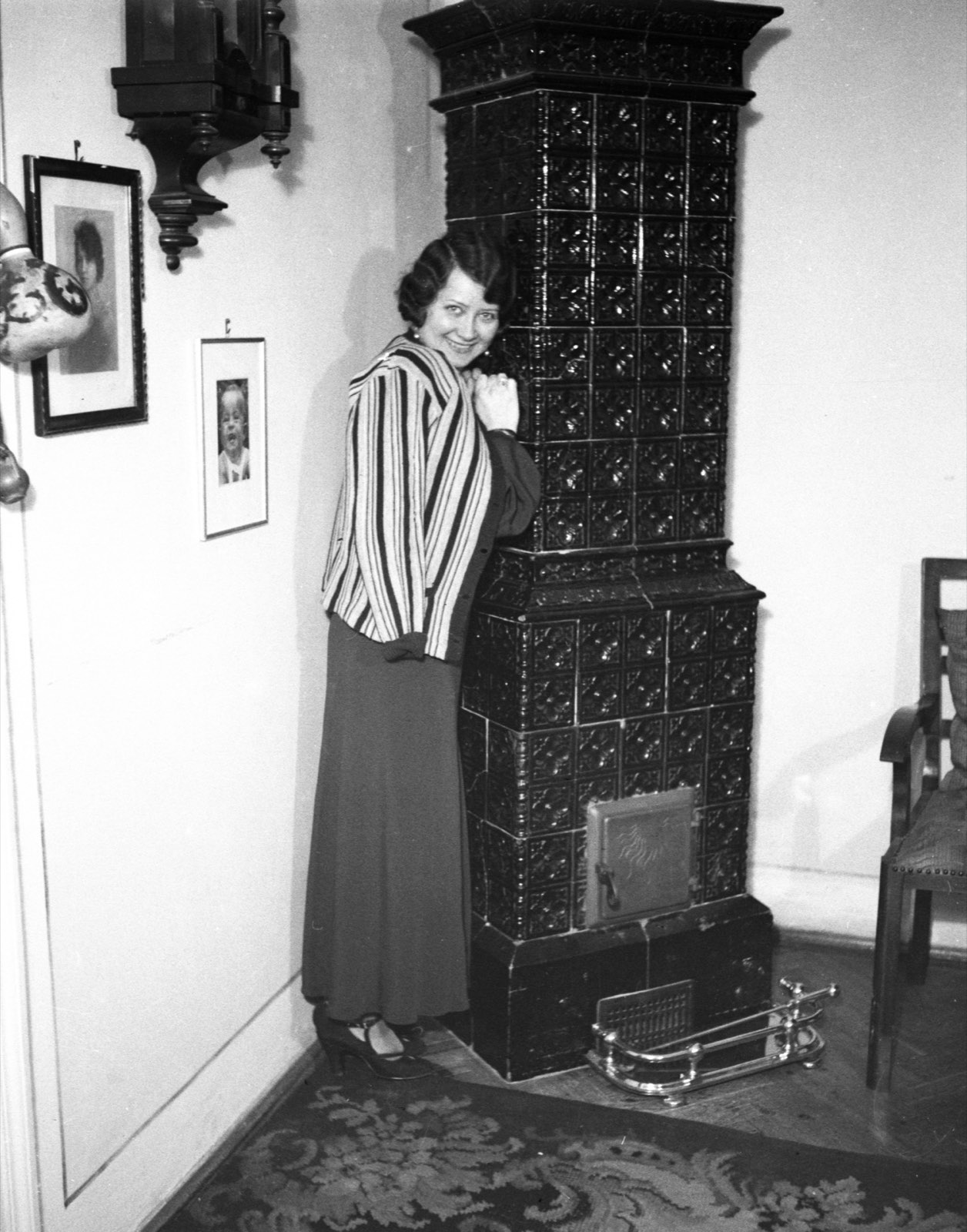
The Connecticut installation
A kachelofen is built on site. The ceramic skin is shipped from Austria or Switzerland in numbered cases, but the refractory core is laid course by course by a mason who has trained on this work, and the two trades have to be in the room at the same time. In the Northeast we have been running these installations through two shops. Maine Wood Heat in Skowhegan handles the European stove import, the engineering coordination with Sommerhuber, Tonwerk, or Brunner, and the chimney sizing for a Connecticut climate. Solid Rock Masonry, also out of Maine, brings a crew that has built kachelofen and Russian masonry heaters for twenty-five years and can read a Brunner core drawing without translation. Lead time from the first conversation to a finished, fired, cured stove ready for the first burn is between five and eight months on a new construction schedule. Brunner, the Bavarian house in Eggenfelden, ships their HKD firebox door insert with the cast-iron face powder-coated to a graphite anthracite, and the Solid Rock crew sets the door before they begin laying the tile course above it.
Where it sits in the plan
The kachelofen is the heating gesture that determines how a country-house plan is drawn. In our Connecticut work we usually set it against the chimney mass on the long wall of the sitting room, so the back of the stove handles the breakfast room or the back stair on the other side of the wall, and a single firebox heats two rooms at the temperature the wool sock asks for. A Sommerhuber kachelofen at two and a quarter meters tall faced in a hand-glazed bone-cream tile, set against a fieldstone-laid-in-lime-mortar chimney mass, reads as the load-bearing center of the room. You do not put art above it. You do not crowd the bench with a side table. The room arranges itself around the heat.
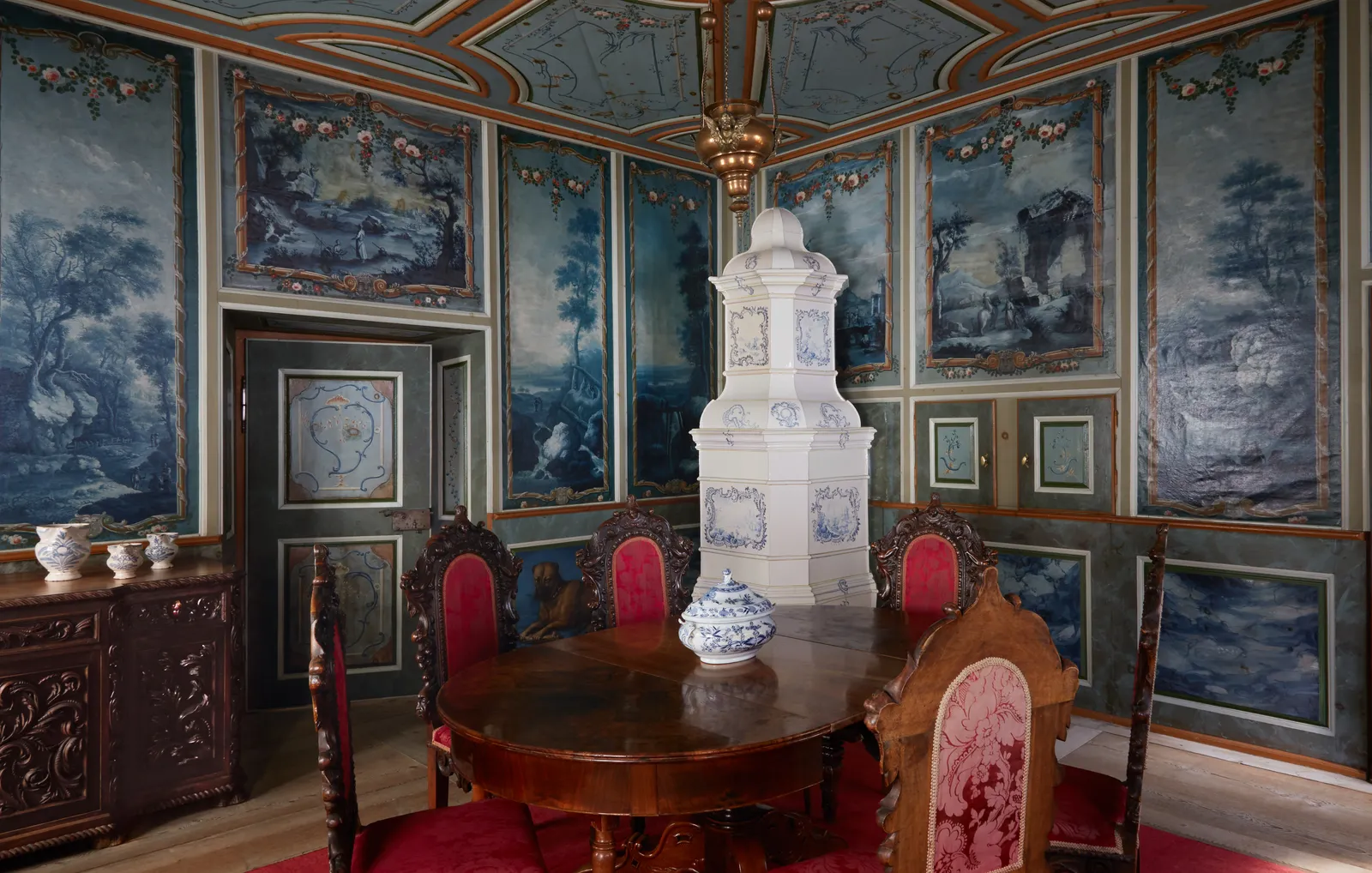
Why this matters for new construction
A new Connecticut country house, even a serious one in Greenwich or New Canaan, very often reads as new for the first ten winters. The plaster is too clean, the metalwork is too crisp, the heating is invisible and arrives at the room as conditioned air. A kachelofen is one of the three or four moves that changes this on the first cold morning. The house wakes up around a mass that holds yesterday's fire. The dog finds the bench. The wool runners by the boot room dry on the back of the stove. A guest sits with their back to the warm face and reads. This is the felt experience of an inherited house, and you cannot get there with an insert and a fan. We treat the kachelofen as a fixed line item the way we treat the limewash plaster, the fumed oak floor, and the fieldstone hearth: named workshop, named installer, drawn into the plan before the foundation is poured.
Speak with us
If you are building or restoring a country house in Connecticut, the Hudson Valley, or the Berkshires and want a kachelofen drawn into the plan from the structural set forward, we will walk the project, size the stove to the room volume and the daily fuel pattern, and coordinate Sommerhuber, Tonwerk, or Brunner with Maine Wood Heat and Solid Rock Masonry on a single schedule. Call (203) 651-8649 to begin the conversation.
Sommerhuber, Steyr
Austrian ceramic house pressing and glazing kacheln since 1491. Bone-cream, lichen-green, and graphite glazes hand-finished and palletized by elevation for site assembly.
Tonwerk, Lotzwil
Swiss masonry-heater engineering. Cores sized in kilowatt-hours stored rather than BTU per hour. Used in two recent Litchfield County sitting rooms.
Brunner, Eggenfelden
Bavarian firebox and door system. The HKD insert in graphite anthracite is the door we typically draw into a Connecticut new-build kachelofen above a fieldstone hearth bench.
Maine Wood Heat and Solid Rock Masonry
The two Maine shops we coordinate for North American kachelofen installation. Five to eight month lead time from first walk to first burn on a new-construction schedule.
Sources and notes
Field reference
Standing kachelofen precedents studied through Hans-Jorg Ruch's restoration archive.
European workshops
Sommerhuber (Steyr, Austria), Tonwerk (Lotzwil, Switzerland), Brunner (Eggenfelden, Bavaria). Specification documents, glaze books, and core drawings held in the Chesa material library.
North American installers
Maine Wood Heat (Skowhegan, Maine) and Solid Rock Masonry (Norridgewock, Maine). Coordination notes from current Litchfield County and Greenwich projects.
Discuss a kachelofen specification.
Send a brief or call the studio. We respond to every serious inquiry within two working days.