
Project/Restoration/Lombardy/Third season
Cascina sopra il lago
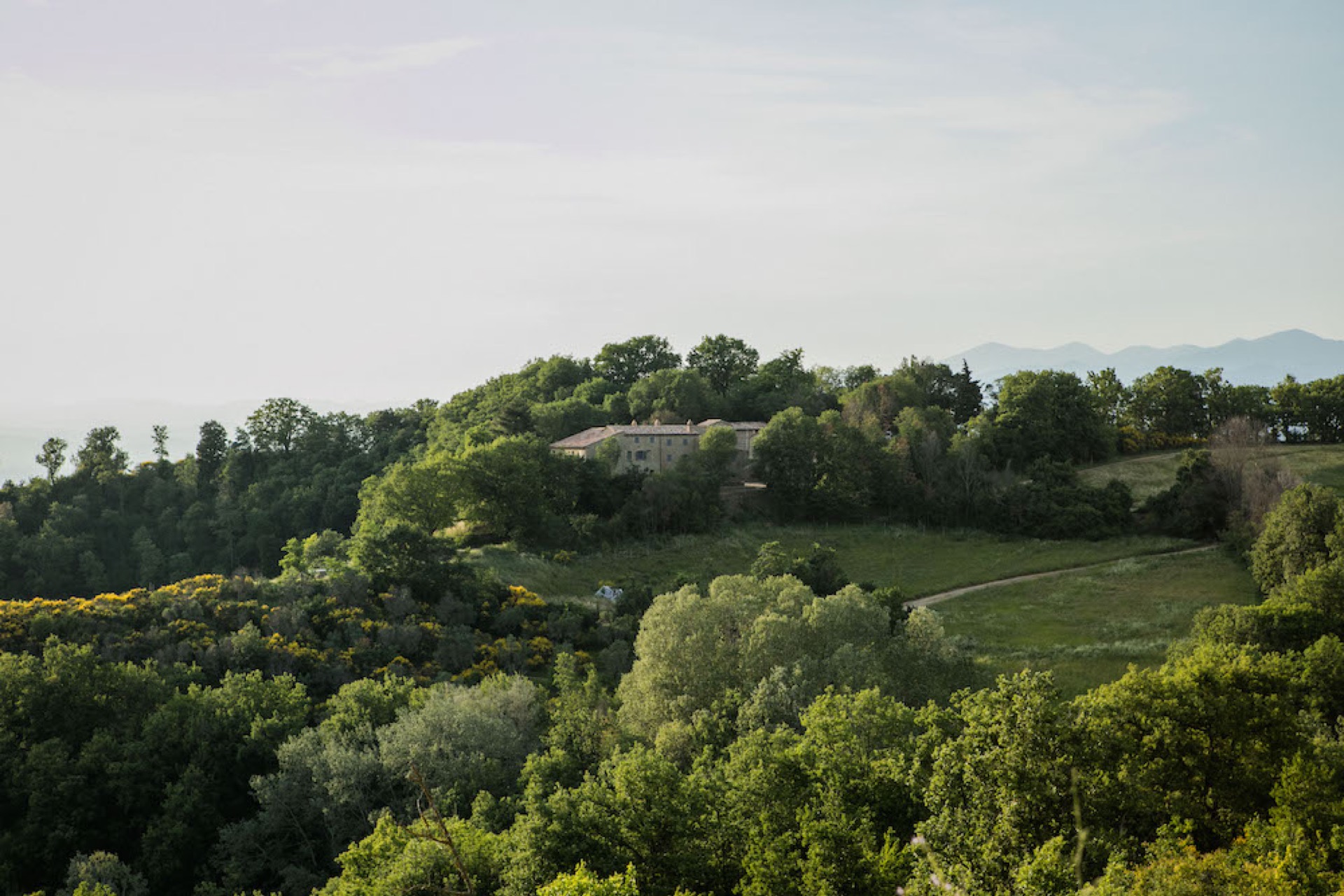
A four-volume Lombard farmhouse on the western shoulder of the Italian lakes, restored over three winters with the original hand kept visible.
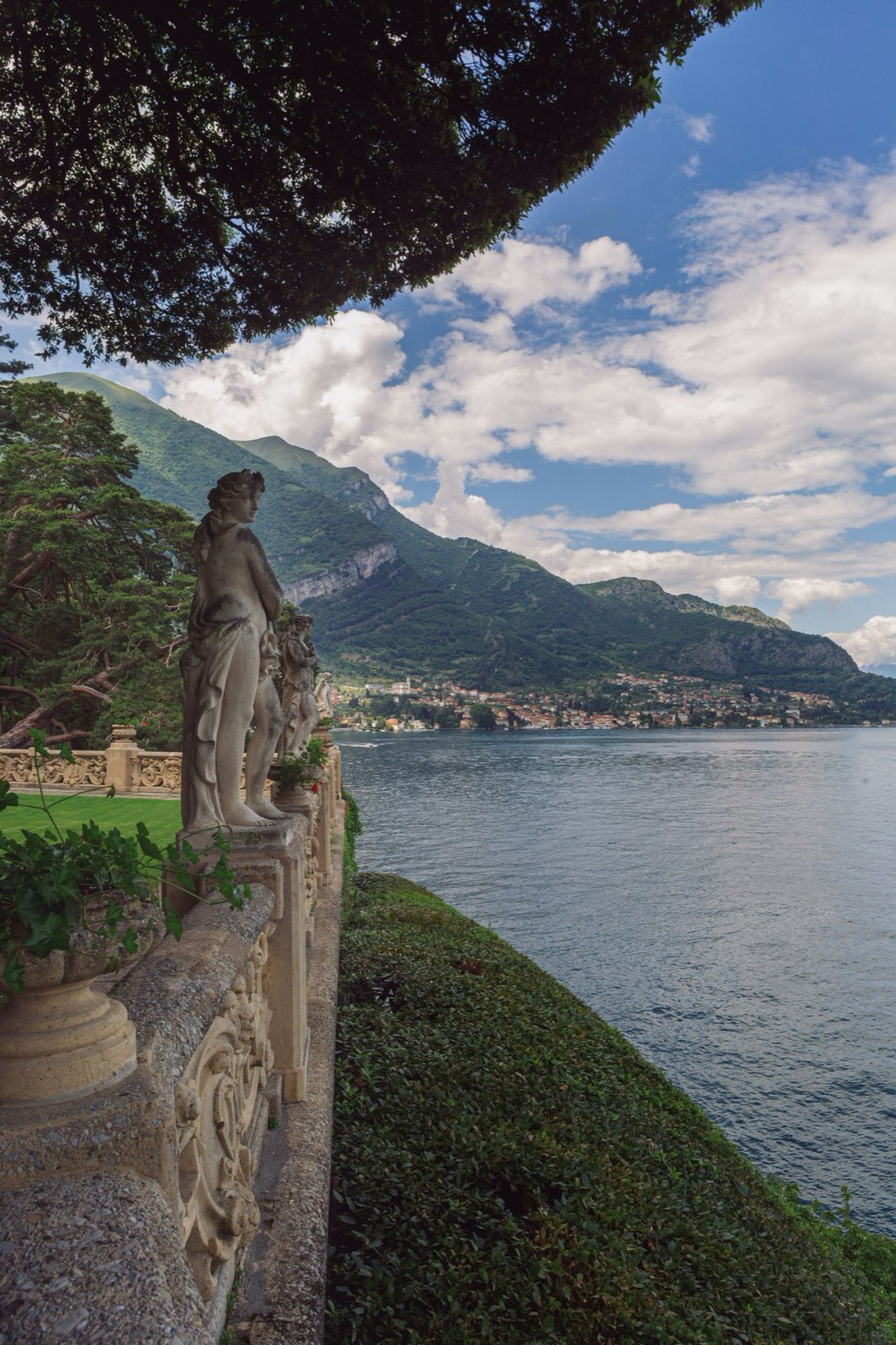
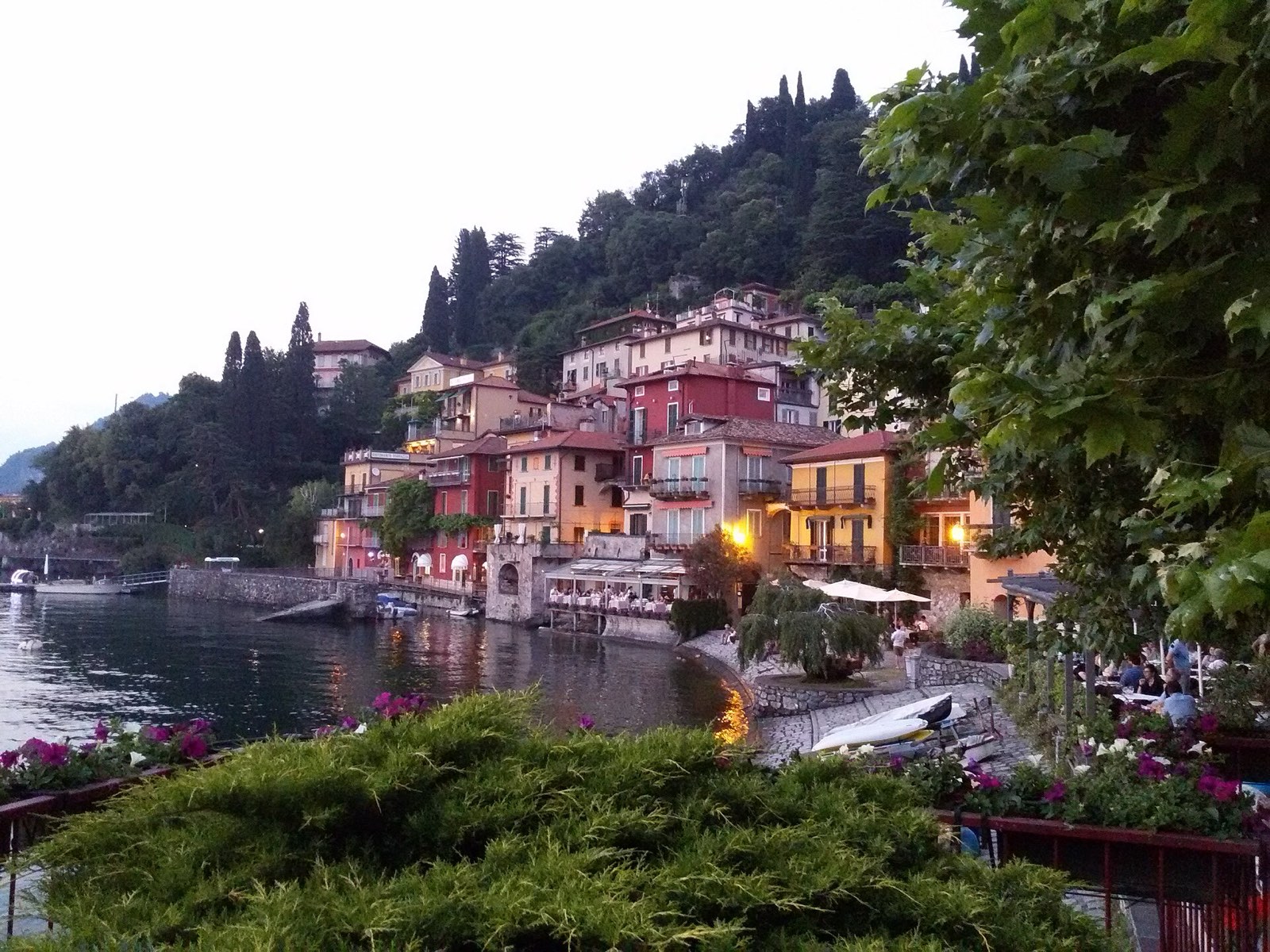
The cascina sits at 480 metres above the western lake, a four-volume farm settled into a Lombard hillside of chestnut and vine. The owners, a family office between Milan and New York, asked for a primary residence that could also receive guests in two separate wings without losing the quiet of the original house. We worked the way Studio Peregalli works in Lombardy and the way Axel Vervoordt works in Wijnegem: read the building first, edit hard, keep the original hand on every surface that survived. Three winters of work, no sandblasters on the property, no spray gun in any room. Every fixed material is tied to a named workshop, every patina is the result of a hand finish over a mineral ground. The house now reads as if it had been quietly maintained for three generations rather than restored in a campaign.
Reading the cascina
Before the first kilo of plaster left the site, we spent a winter inside the building with a small team of restorers from Como and Brescia. We mapped every chestnut beam, every fragment of original cocciopesto in the cantina, every section of lime render that still carried its first coat. The plan that emerged is conservative. The central body keeps its original four-room footprint at ground level, with the hearth recentred on the long wall. The fienile on the east becomes the kitchen and the family room. The stalla on the west becomes the principal suite over a vaulted bath. A small new volume in lime-rendered stone replaces a collapsed shed at the back, holding the boot room and the laundry. Nothing else was added to the envelope.
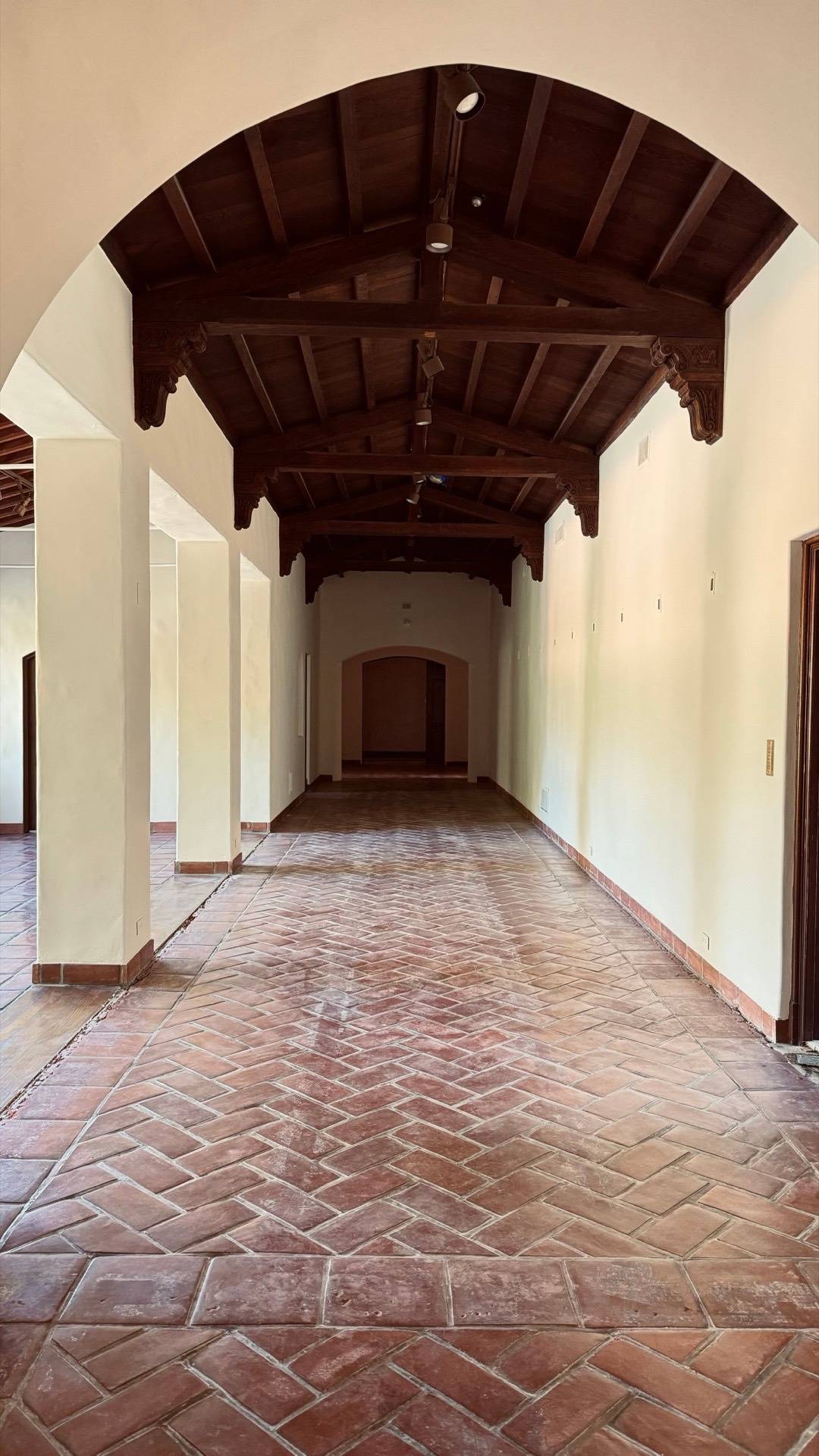
Chestnut, left as found
The original chestnut beams were left as found, lime-washed in place, and never sandblasted. Where the rafters had darkened to near black under a century of woodsmoke, we washed them once with a soft potash solution, brushed them with a horsehair brush, and stopped. Where the joists were sound but pale, they were given a single thin coat of lime mixed on site with the same pit lime used for the walls, then waxed lightly by hand. The carpenter from Bellagio rebuilt three end bays in reclaimed chestnut from a dismantled tobacco shed near Sondrio, scarf-jointed and pegged, with no metal hangers visible. The ceiling reads as one continuous fabric of timber that has aged in this room.
Cocciopesto floors, troweled in three coats
The ground-floor floors are cocciopesto, hand-troweled in three coats over a sand-and-lime substrate. The aggregate is crushed Impruneta terracotta, mixed with pit lime, marble dust, and a small fraction of pozzolana. The first coat is laid coarse, screeded, and left for a week. The second is finer and worked with a wooden float. The third is polished with a steel trowel over four days, then sealed with two coats of beeswax dissolved in turpentine, hand-rubbed with a linen pad. The colour settles between rose and clay, with the lighter passages where the trowel pressed hardest. The floor is cool in August, warm against bare feet in November, and will continue to harden for thirty years.
Carrara and Bardiglio in the formal bath, Verde Alpi in the powder room
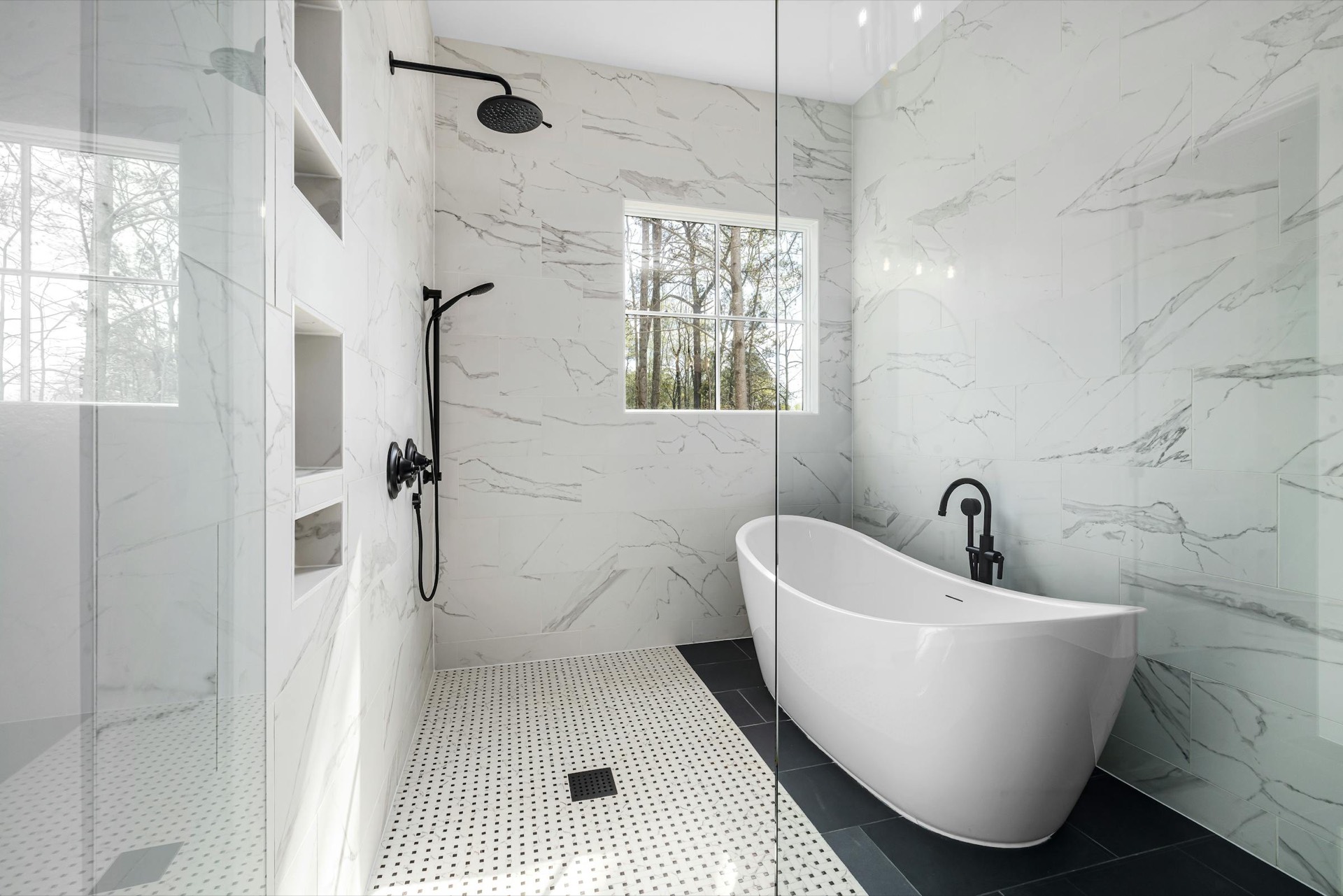
The principal bath sits inside the old stalla under a barrel vault. The bath itself is a single block of Carrara statuario from the Henraux quarry above Seravezza, shaped on a slow gang saw and finished by hand to a soft satin. The floor is Bardiglio in honed 60 by 30 slabs, laid with a two-millimetre lime joint, with a Carrara band at the threshold. The basin is a hand-carved Carrara trough on a forged iron stand. The powder room, by contrast, is a small dark room behind the entry. The walls and floor are Verde Alpi from the Aosta valley, honed, with a hand-rubbed lime ceiling and a single brass sconce by a workshop in Bergamo. No marble runs to a wall on a mitre joint. Every edge is hand-eased and waxed.
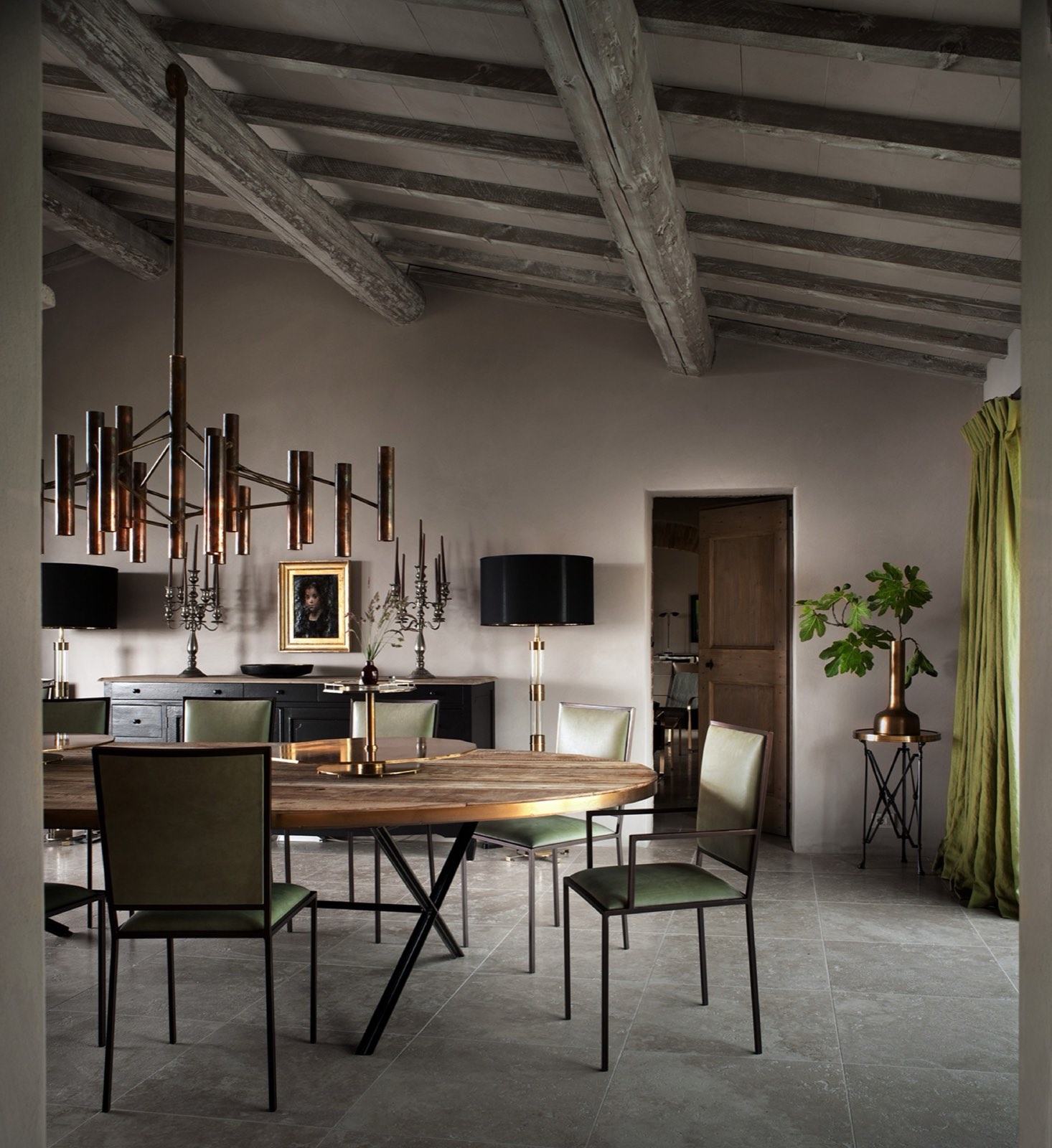
Walnut joinery in the dining room
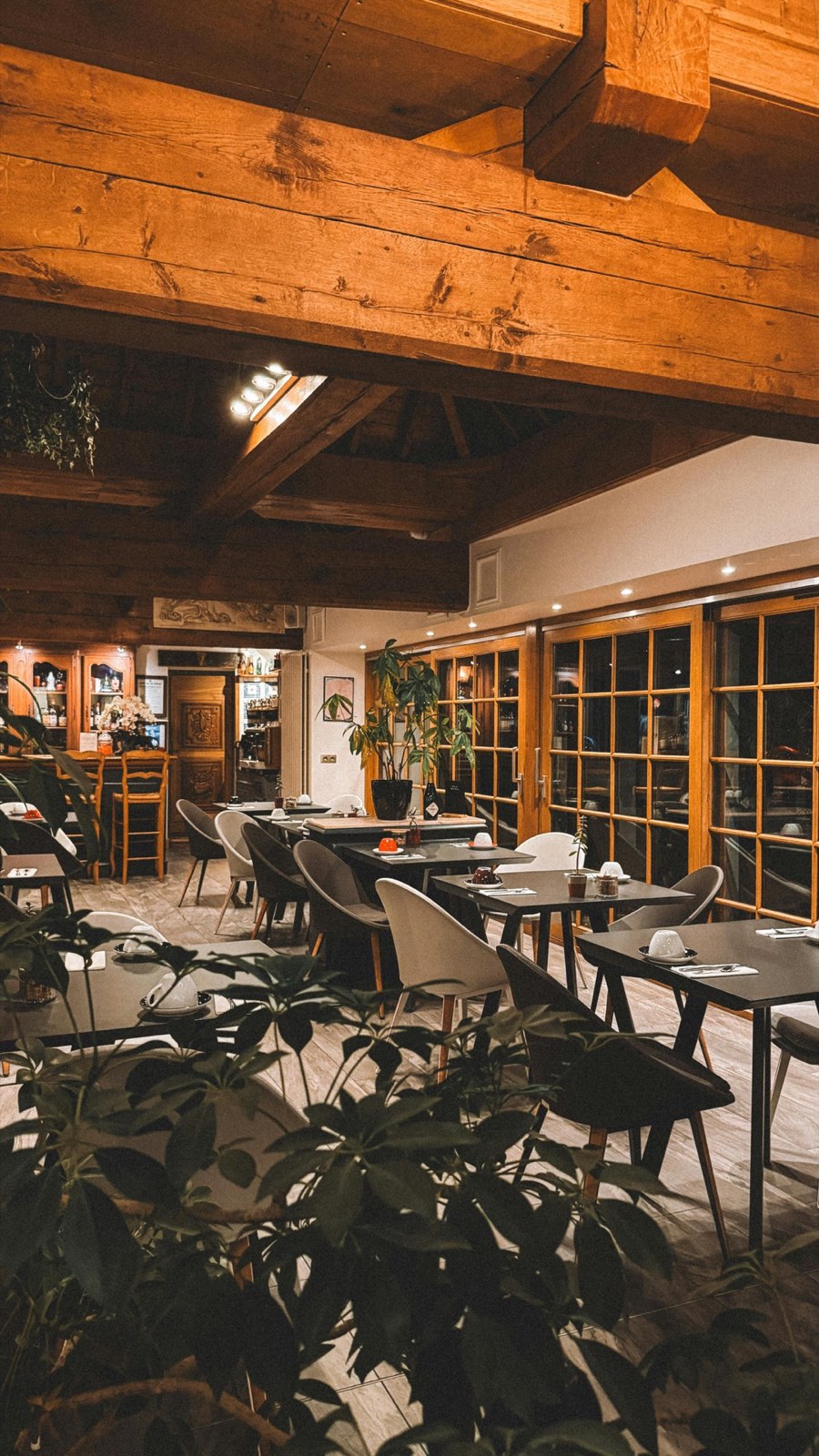
The dining room joinery is European walnut, cut from a single bole found in the Carnia uplands and air-dried for nine years before milling. The sideboard and the wall of cabinets were drawn at full scale on site, prototyped in pine, and then cut by a workshop in the Veneto that still works to hand-rubbed wax rather than lacquer. The finish is six coats of beeswax and carnauba over a thin shellac sealer, polished between coats with a horsehair pad. Nothing is lacquered. The grain reads dark in winter and amber in summer, and the wax can be refreshed by hand once a year with a clean cloth. The dining table is a single 4.2 metre slab of the same walnut on hand-forged trestles.
Hand-forged ironwork
Every piece of fixed iron in the house, hinge, latch, stair rail, fire screen, lantern bracket, was forged by a smith outside Brescia whose shop works at Officina Rivadossi grade. The hinges are strap hinges in the Lombard register, longer than they need to be, peined cold over the door rails. The stair rail is a single forged bar with a hand-rolled scroll at each landing, set into the cocciopesto stair with lead plugs. The exterior gate is a 2.4 metre piece in forged square bar with a top rail that follows the slope of the hillside by a centimetre. The smith was on site for ten days during installation, working a portable forge in the courtyard.
Pierre Frey and Rubelli, used sparingly
The textile budget is modest by the standards of the price band. A single Pierre Frey woven linen runs the curtains in the sala and the long banquette under the kitchen window. A Rubelli silk in a Lombard ochre dresses the four dining chairs and nothing else. The principal bed is in unbleached Italian linen from a mill near Bergamo, with a single Holland and Sherry wool throw at the foot. Bedrooms are otherwise in plain Belgian linen and undyed wool. The intent is for the woven cloth to read as the most decorated surface in any room, against lime walls, waxed walnut, and stone.
How the house lives
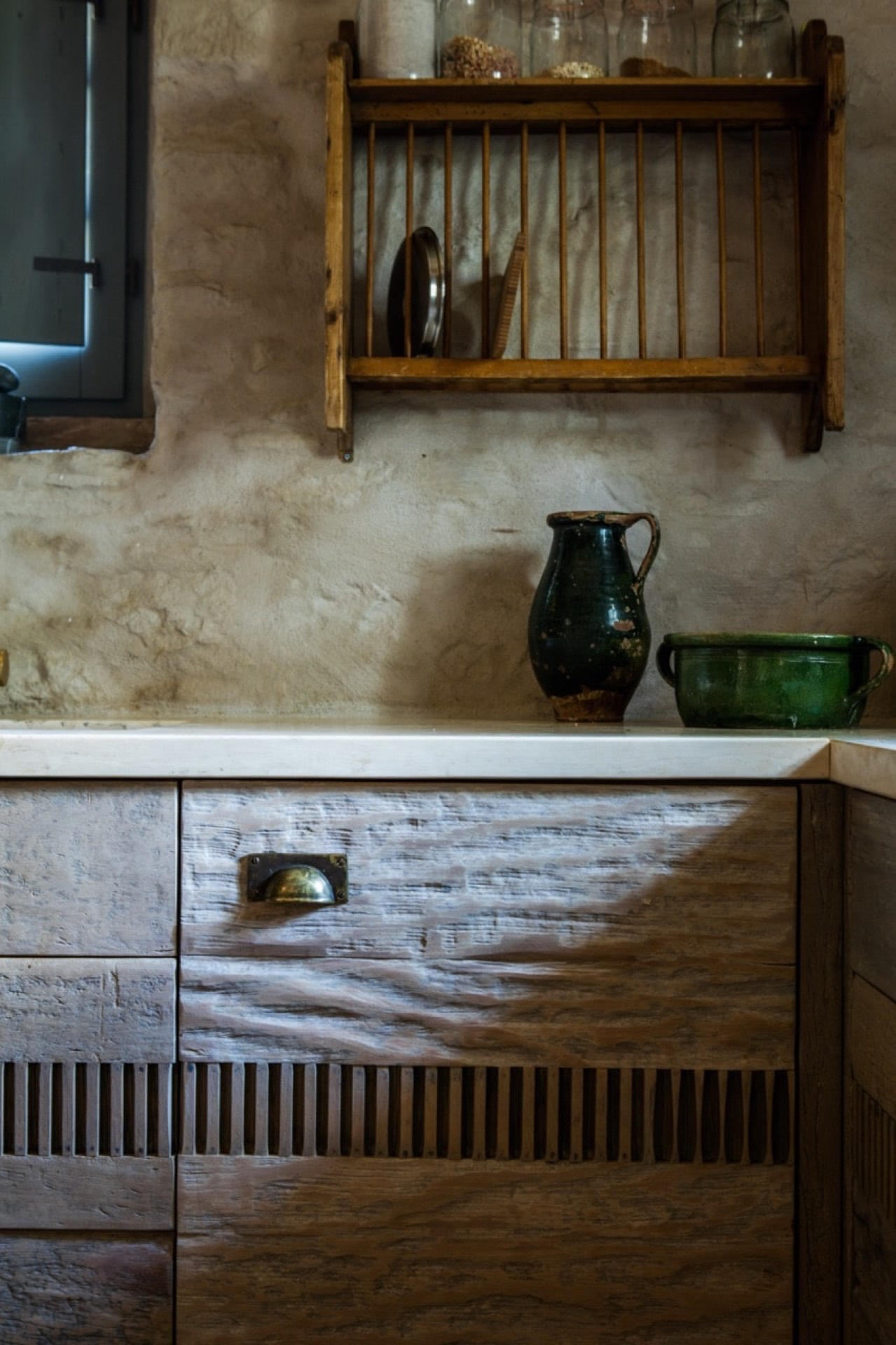
The cascina is a primary residence for nine months of the year and a guest house for the other three. The boot room sits before the foyer, with a stone bench and a row of hooks in forged iron. The kitchen splits in two: a working scullery behind a chestnut door, and a family kitchen built around a wood-fired Sommerhuber ceramic stove that heats the room into the spring. The sala holds the original hearth, rebuilt in fieldstone laid in lime mortar with a single forged crane. The two guest wings have their own entries and their own stair, so the central house can stay quiet when guests are in residence. The house was completed in the spring of 2024. The owners spent the first winter without staff, which is the test we ask of every project.
Selected views
Cascina sopra il lago
Sources and notes
Henraux, Seravezza
Statuario for the principal bath, cut on a slow gang saw and hand-finished to a soft satin.
Impruneta terracotta kiln
Crushed Impruneta terracotta aggregate for the cocciopesto, combined on site with pit lime, marble dust, and pozzolana.
Officina Rivadossi-grade smith, Brescia
Strap hinges, stair rail, fire screens, exterior gate, lantern brackets, forged on a portable forge in the courtyard during installation.
Sommerhuber, Steyr
Wood-fired ceramic stove at the centre of the family kitchen, sized to hold the room from late October into April.
Veneto walnut workshop
Dining-room joinery in single-bole Carnia walnut, finished in hand-rubbed wax over shellac, never lacquered.
Pierre Frey and Rubelli
One Pierre Frey linen and one Rubelli silk, each used in a single room. Bed linens and bedrooms in plain Italian and Belgian linen.
Discuss a Lombard or lakes restoration.
Send a brief or call the studio. We respond to every serious inquiry within two working days.