Project/Engadin restoration/Completed 2017
Chasa in the Engadin
An eighteenth-century chasa held in its own hand, repaired room by room.
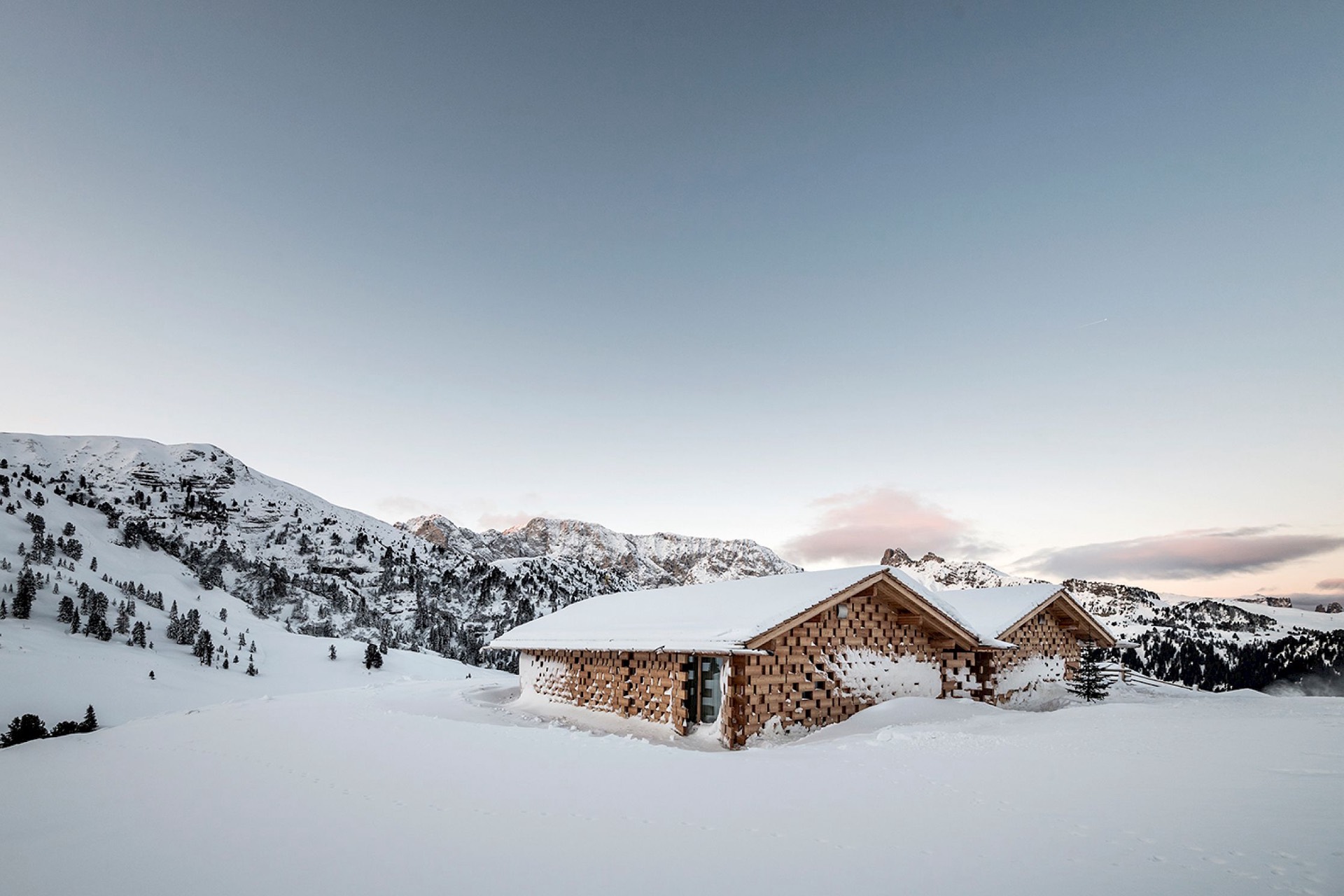
This is the house the practice keeps coming back to. A working chasa above the valley floor, walls a metre thick at the base, sgraffito worked into the entry facade in the eighteenth century and still legible. We did not strip it. We read it for a season, then began repairing it from the inside out, with the workshops that have always cut, plastered, and fired in this valley. Every later decision in Connecticut, in the Hudson Valley, in Litchfield County is measured against what we asked of ourselves here.
The sgraffito on the entry facade
The original sgraffito was retained in full. We mapped it, consolidated the failing edges with a lime slurry tinted to the surrounding ground, and left the rest alone. Where a previous campaign had scraped a corner back to plaster, we patched in matching lime, scored the pattern in by hand to meet the historic line, and accepted that the new work will read fractionally fresher for ten or twelve winters before it sits down into the wall. The facade is the face of the house and it is still the eighteenth century's face, not ours.
Arve stube: patched, not replaced
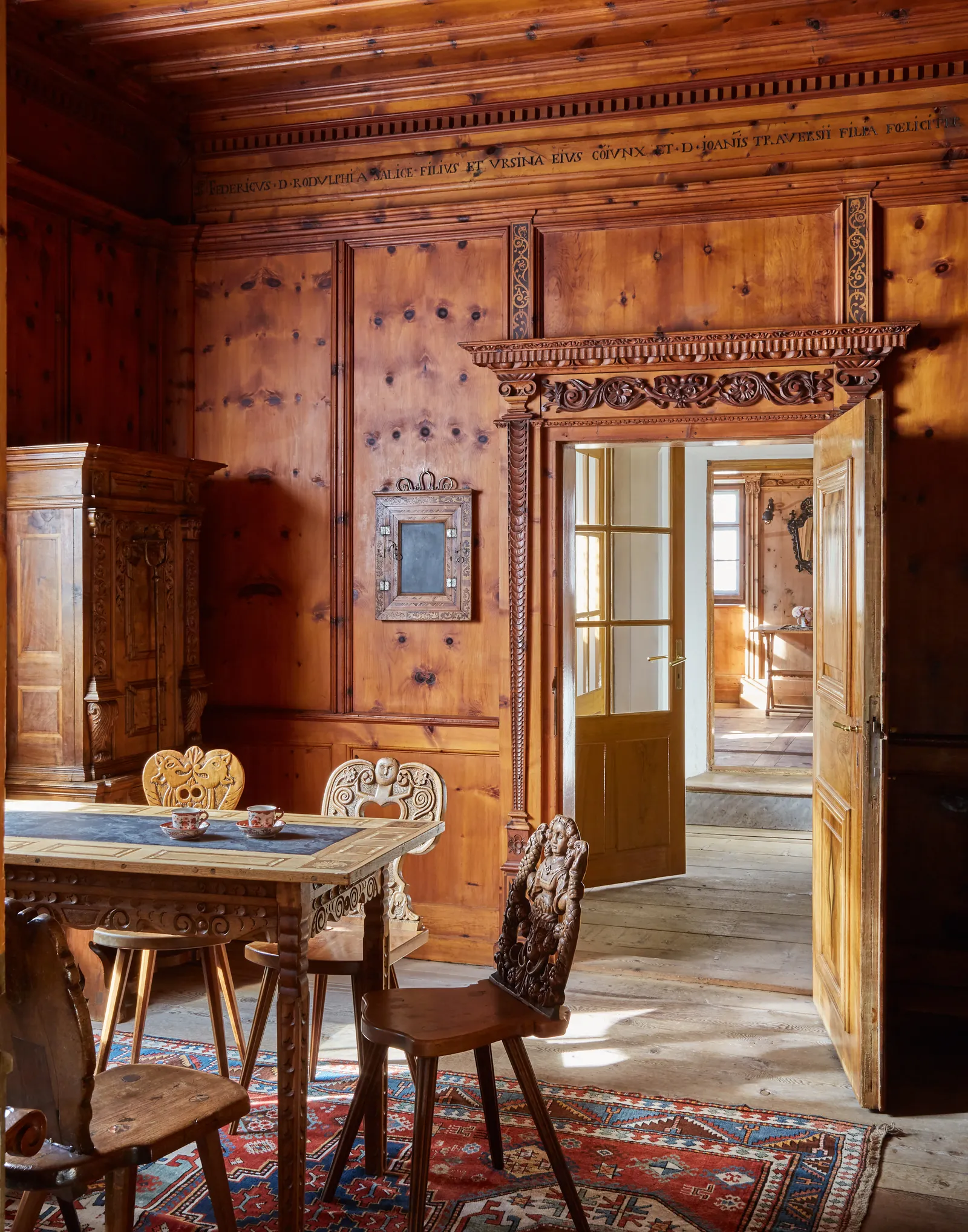
The stube panelling is Arve, the local stone pine, worked in the late 1700s and never lifted out. Two boards on the bench wall had failed at the dowel. We took those boards down, scarfed in new Arve from a single tree felled in the same valley, matched the wax with the joiner who still mixes it for chasas across Zuoz and Guarda, and put the panel back. Everything else stayed in place. The room smells the way it has always smelled in winter, the resin warming as the kachelofen comes up.
A steel stair under chestnut beams
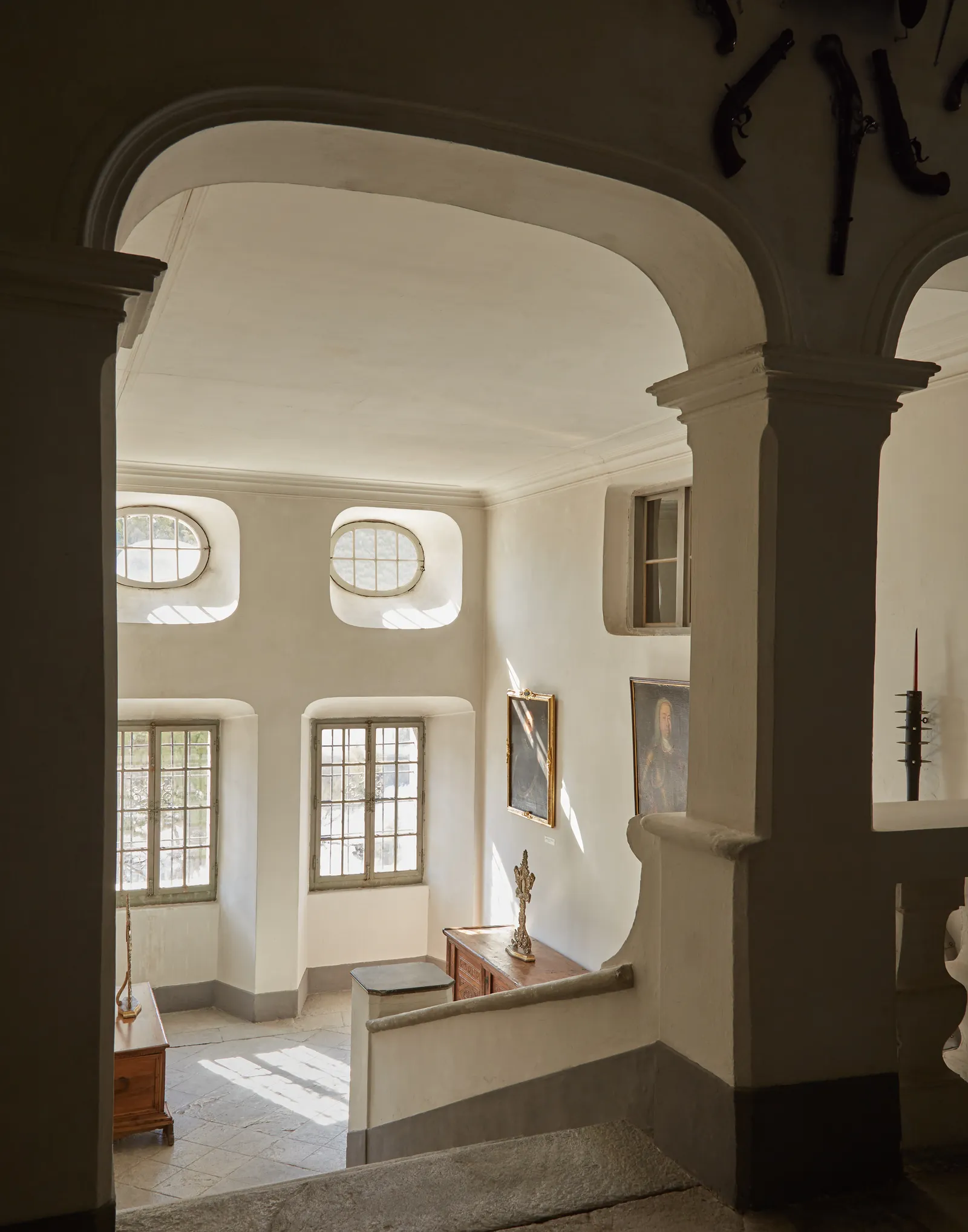
The one piece of new architecture in the building is a stair from the entry hall to the upper floor. Folded blackened steel, four millimetre plate, no nosing, no balustrade on the wall side, an unlacquered bronze handrail on the open side. It sits under the original chestnut beams without touching them. The contrast is the point: a single contemporary gesture that lets every other room read as inherited. Ruch taught the valley how to do this. We followed.
Windows held in their original openings
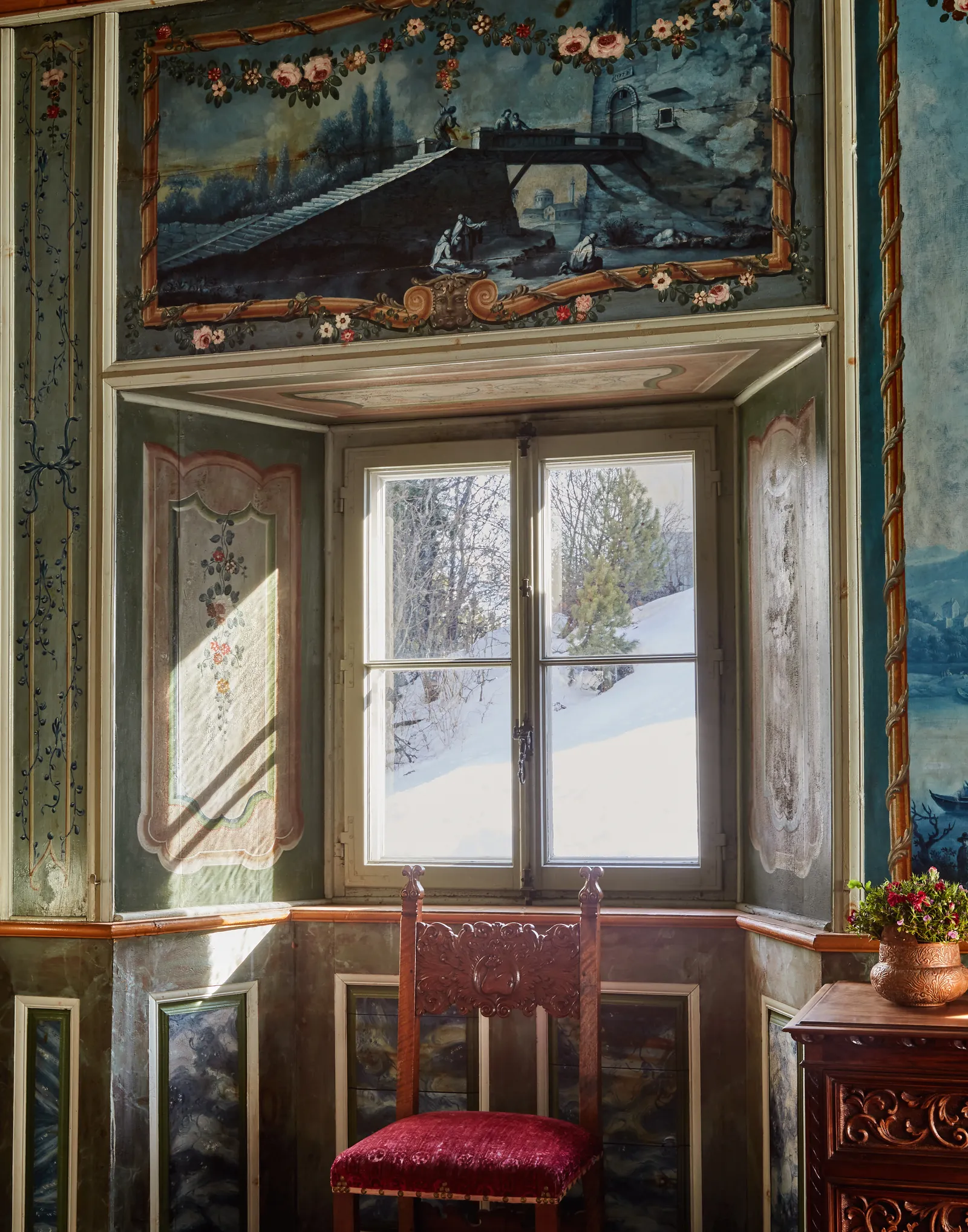
We did not enlarge a single opening. The punched windows in the south wall stay where they were cut, deep reveals splayed inward to throw light against the lime, larch sash repaired and reglazed with restoration cylinder glass from Glashutte Lamberts in Bavaria. On the north side, where the wall thickens to a metre and a quarter, the reveals carry the morning light like a Vermeer interior. New glass where it had to be replaced is hung in the old frames; nothing rectangular and modern was inserted into a hand-cut hole.

A kachelofen rebuilt by Sommerhuber
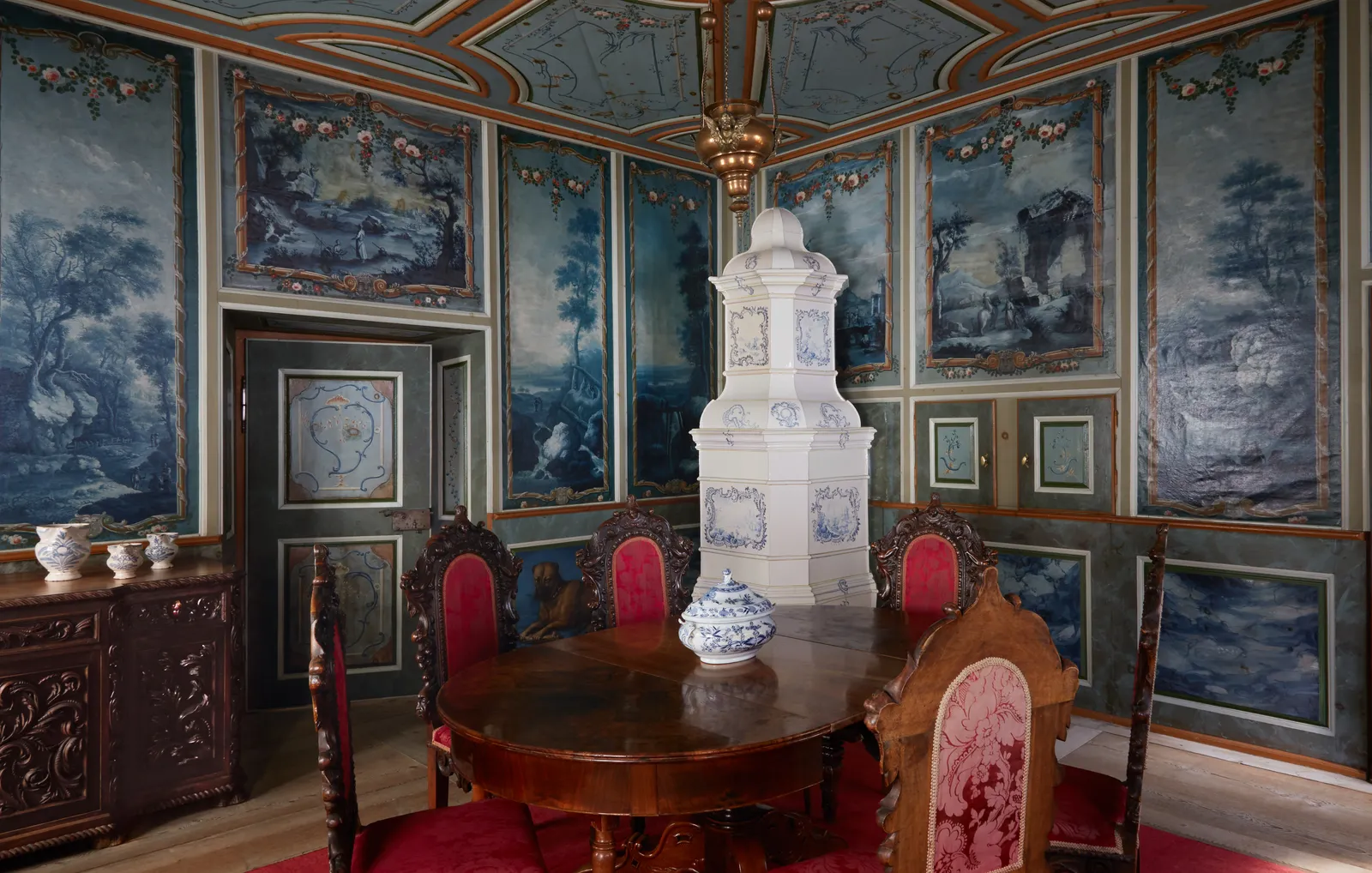
The hearth is the room. We rebuilt the kachelofen with Sommerhuber in Steyr, ceramic tiles fired to a warm bone with a faint manganese bloom, sized to the volume of the great room so that a single firing at six in the morning holds the space at twenty degrees for ten hours. The bench is original, the firebox is new and pulls cleanly from the floor, the flue runs back into the historic chimney without a steel liner showing. A house in this valley is organised around a stove. This one is built to keep being organised around this stove for the next century.
Larch shutters, silvering to pewter
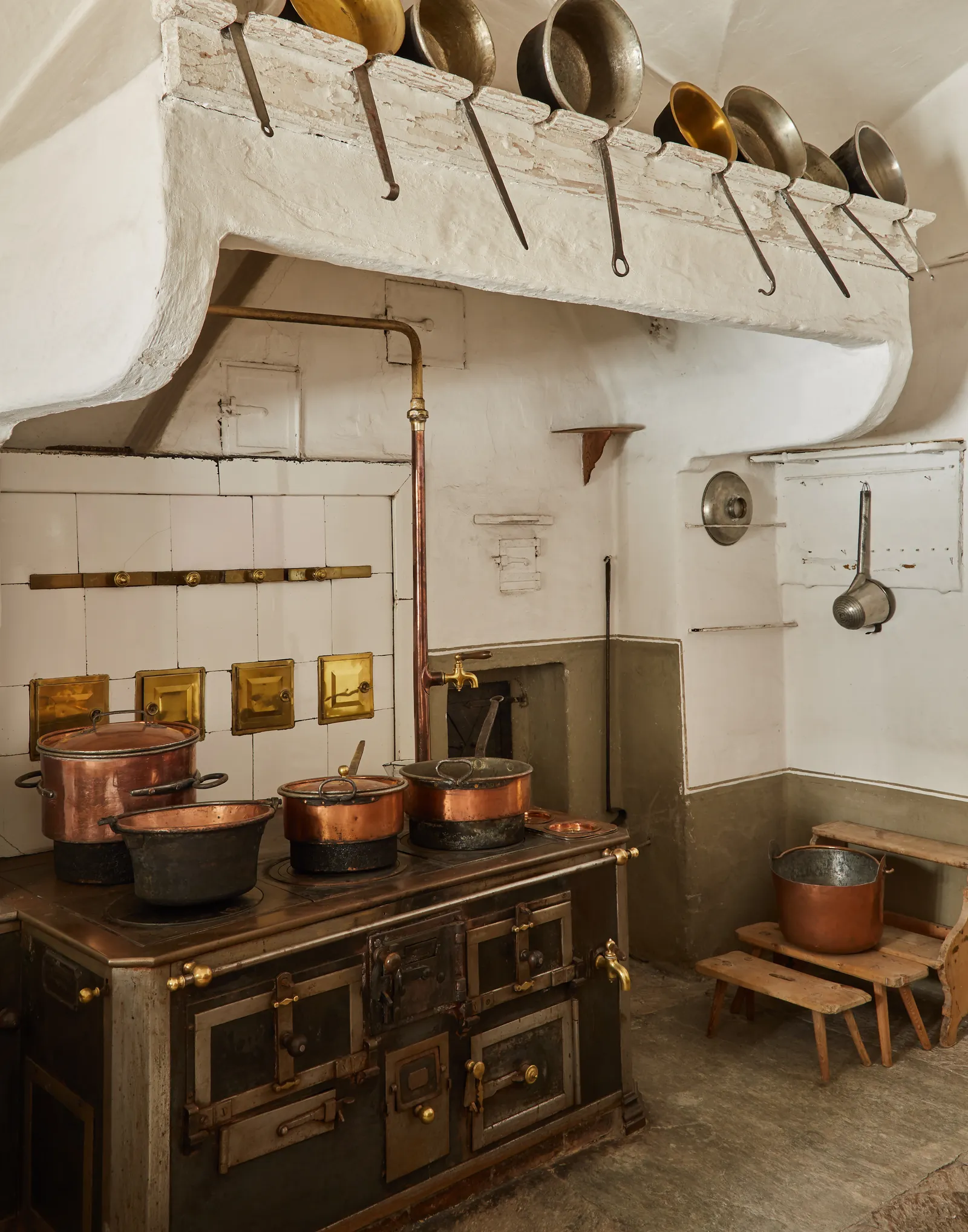
The shutters are larch from the Bregaglia, hand-planed, hung on the original iron pintles, finished only with the weather. In their first summer they were the colour of fresh butter. They are now somewhere between oat and old silver, and in another five years they will be the pewter you see on every honest chasa above the tree line. We did not stain them, we did not seal them, we did not pretend they were new. Material color, not paint color.
What this house taught the practice
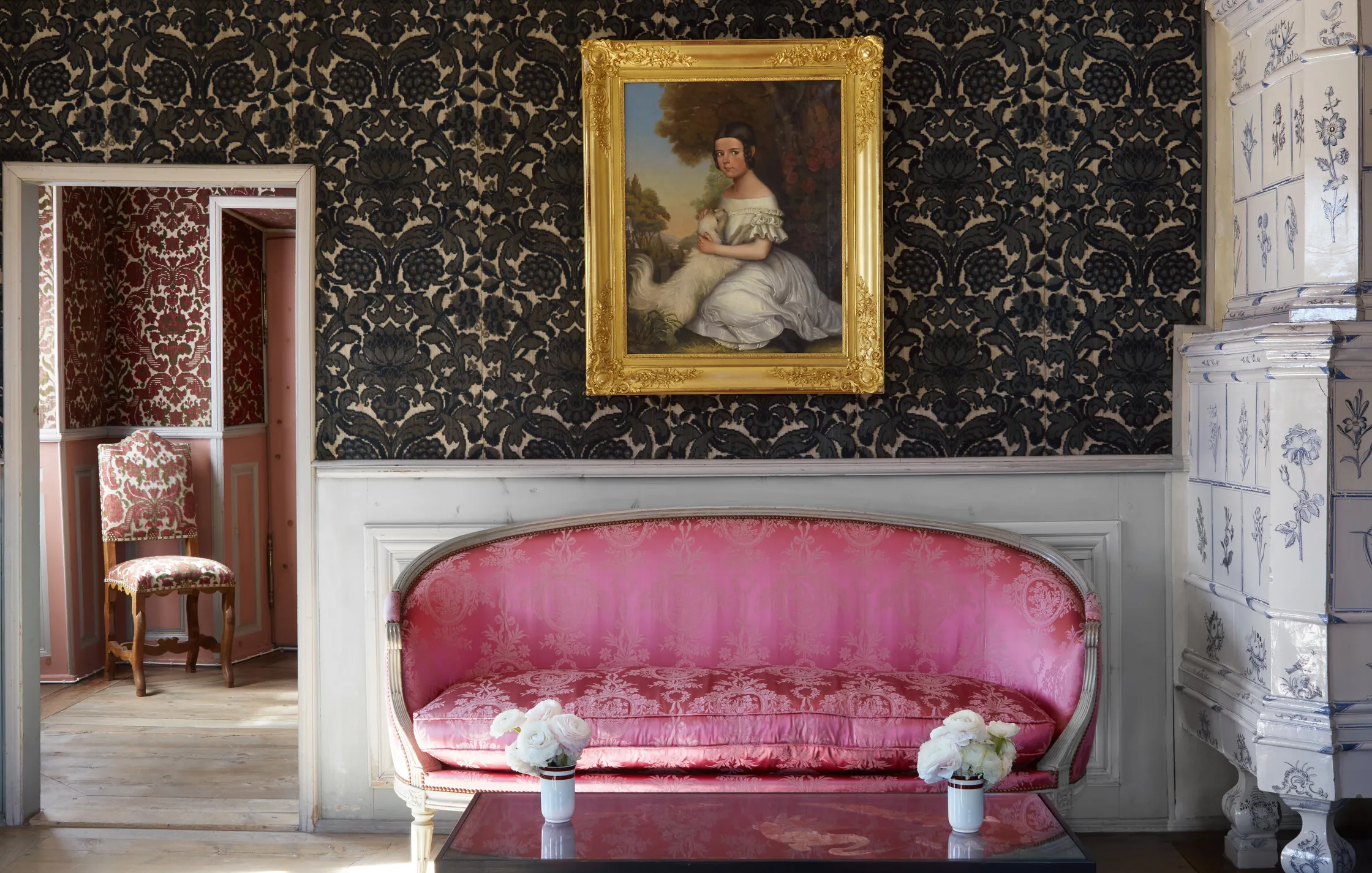
Every Chesa project carries the discipline that came out of this restoration. Read first, edit hard, name the workshop. A Greenwich Shingle Style is built to the same standard as this chasa. A Salisbury Federal is repaired the same way. New construction in Litchfield County is detailed so it will sit down into its hillside the way these walls have sat down into theirs. Reach Chesa Studio at 917.502.9236 to walk through the brief.
Selected views
Chasa in the Engadin
Sources and notes
Engadin trades
Sgraffito, lime plaster, Arve joinery, larch shutters, and chasa carpentry from workshops in Zuoz, Guarda, and the Bregaglia.
Sommerhuber, Steyr
Ceramic tiles fired to a warm bone with a faint manganese bloom for the rebuilt kachelofen, sized to hold the great room for ten hours from a single morning firing.
The Ruch register
Hans-Jorg Ruch's restoration grammar in the Engadin sets the standard the practice is measured against: read the building, edit hard, keep the original hand visible.
Discuss a restoration.
Send a brief or call the studio. We respond to every serious inquiry within two working days.