Service/Interiors
Curatorial Interiors
Boiserie, hand-painted paper, plaster, named textile houses, and rooms that hold a collection.
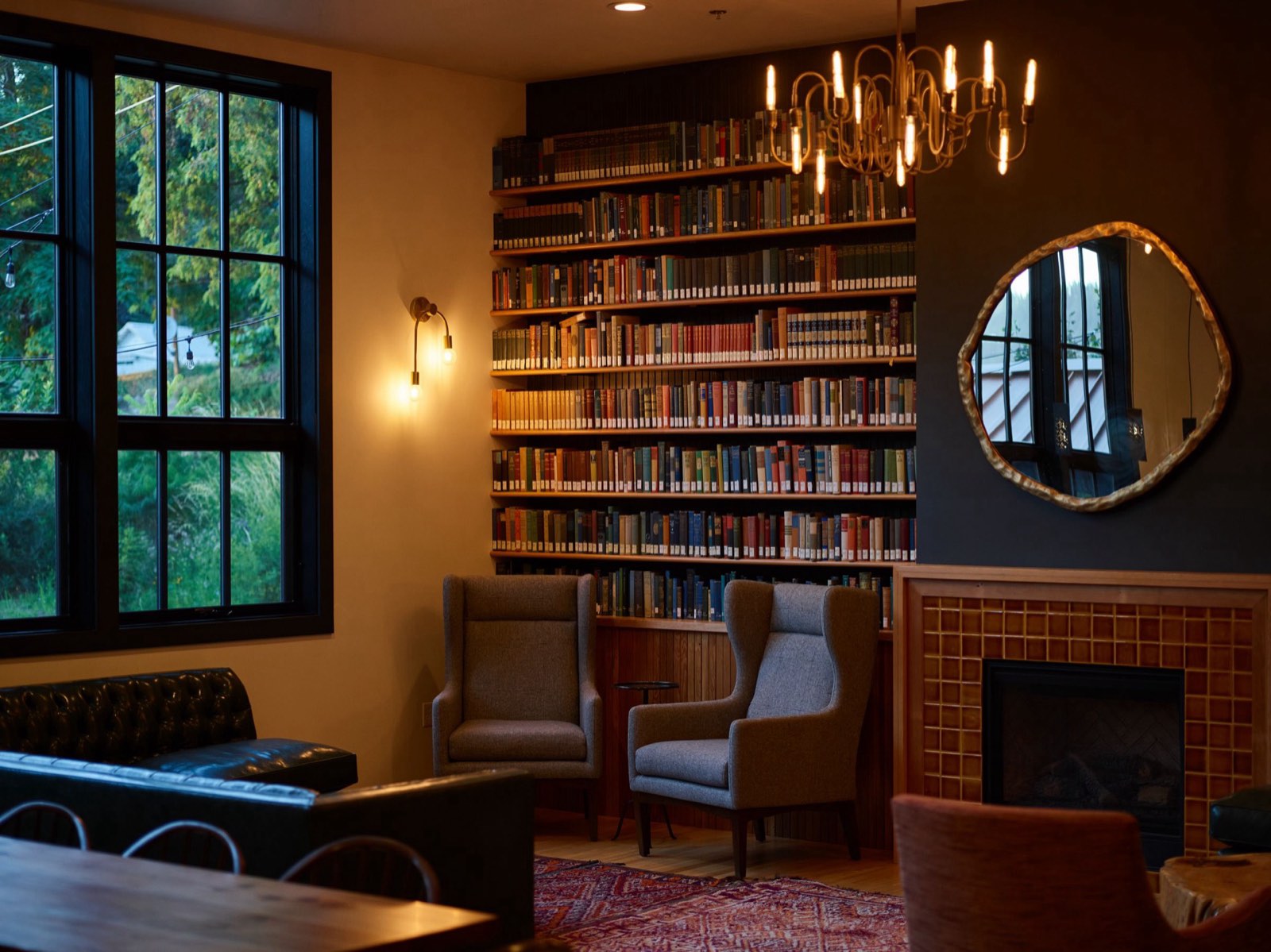
We work with owners who already have a collection, a library, a Bechstein in the salon, three generations of furniture in storage in Milan, and a need for interior depth that goes well past the furniture order. Curatorial Interiors is the practice we run for those clients between Greenwich, Litchfield County, and the Italian lakes. We name the workshop for every fixed material on the plan, we book the textile and wallpaper houses on the lead times they actually run, and we treat the plaster, the boiserie, and the painted finish as the architecture of the room, with the upholstery and the lamps arriving last.

How we work with a collection
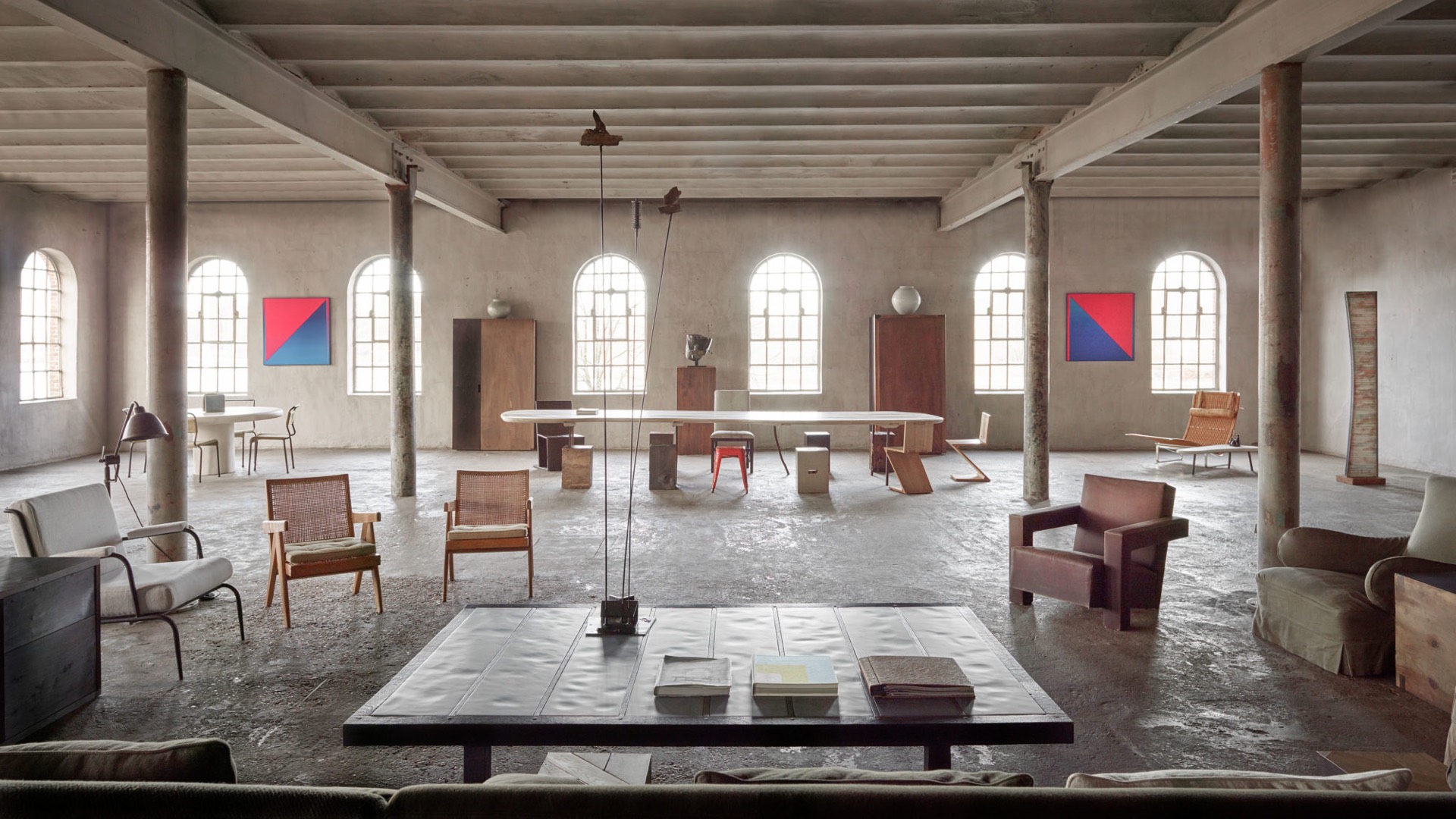
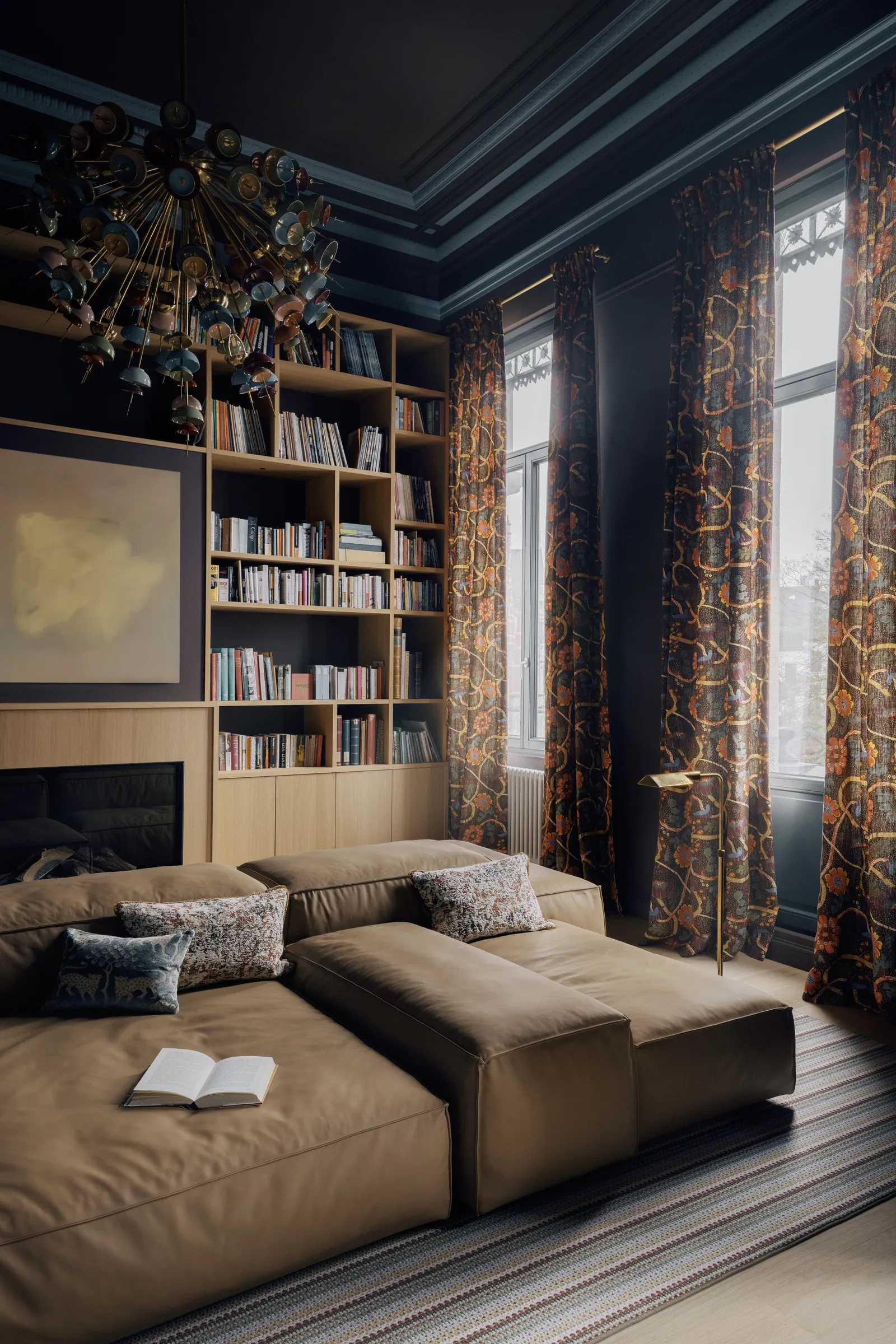
A room with a Morandi over the chimneypiece, a Tang horse on the console, a wall of bound nineteenth-century French novels, and a Rothko study on paper in the stair is not the same room as a furnished room. We start from what the client already owns, walk the storage, list the pieces by weight, light tolerance, scale, and ceremony, and only then draw the floor plan. The library wall is sized to the books on it. The salon wall the Morandi will hang on is plastered in a tone that lets the painting carry, usually a hand-troweled lime warmed to bone, never a flat trade emulsion. The music room is laid out from the instrument outward, with rug, seating, and lamp set to the player's sightline.
Named textile houses, used on their own terms
We specify Pierre Frey and the Braquenie archive for printed cotton and toile that should read as inherited, Le Manach for the small-pattern French weaves that suit a country salon, Fortuny for the silk lampshades and the Venetian pendants over a long dining table, Rubelli for the heavier Italian silks on a salon chair, Dedar where a contemporary edge belongs against old plaster, Holland and Sherry for the wool flannels and the billiard cloths, Loro Piana Interiors for the cashmere throw on the reading chair and the cashmere wool on the bedroom bench, Robert Kime for the antique-feeling document prints on a four-poster, Lee Jofa for the English chintz that a Greenwich client will know by name, and Brunschwig and Fils for the wallpaper-and-fabric pairings that hold a Federal hall together. We do not stack houses for variety. We pick the right house for the room and stay with it.
Wallpaper as a fourteen to twenty week decision
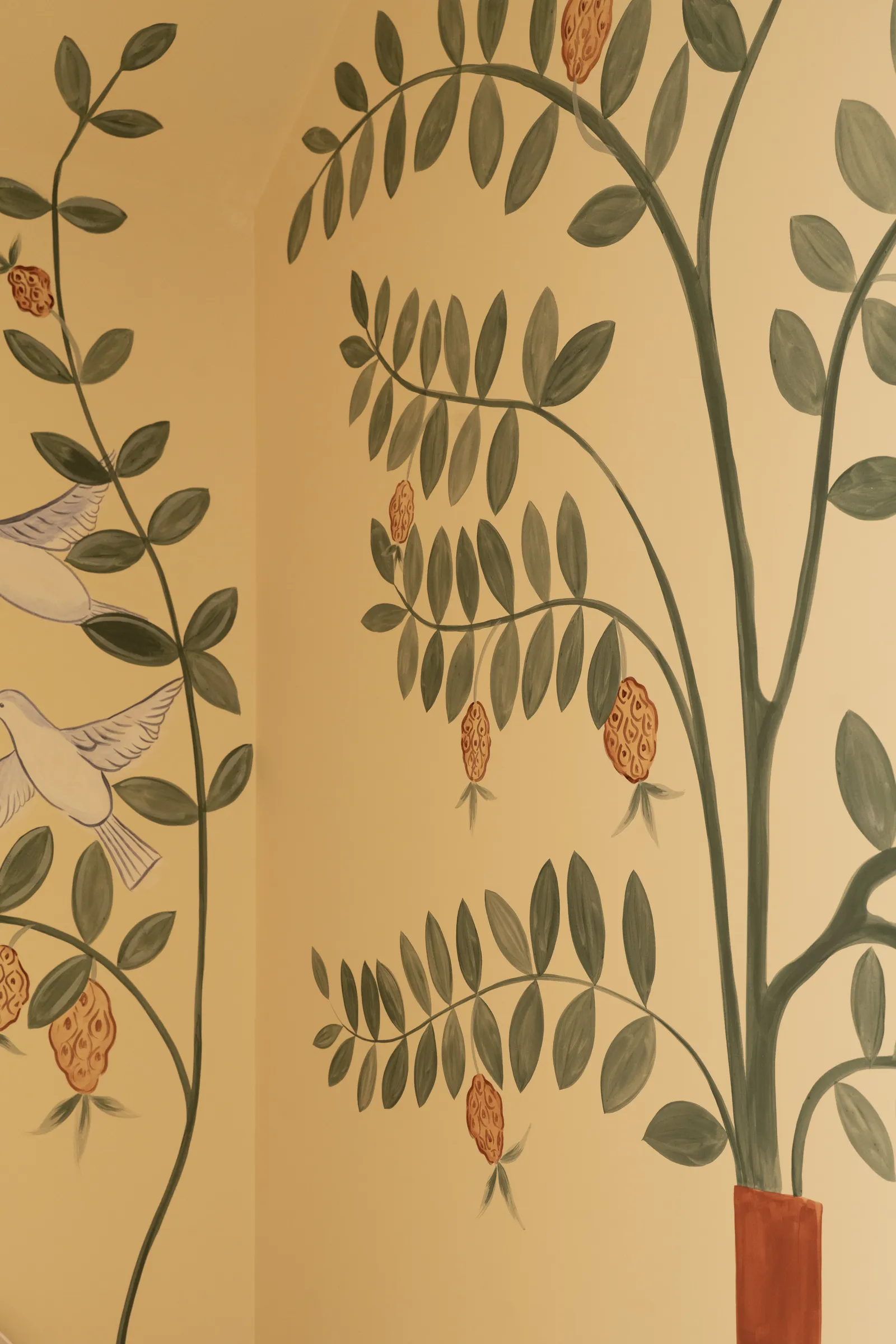
Hand-painted wallpaper is a planned commitment, not a late substitution. A de Gournay chinoiserie on silk for a dining room runs fourteen to twenty weeks from sign-off to delivery, plus paste-up by a paperhanger who has hung this house before. Fromental works to a similar calendar, with more painterly latitude. Zuber scenic panels, when the room is right for them, require an early decision on the scene and a wall that has been replastered, sized, and lined to receive them. Iksel digital scenic and grotesque papers come in faster but still need a serious paperhanger and a real lining paper. We brief the client on the calendar at the first interiors meeting, because the wallpaper sets the date the room can be photographed, not the upholstery.
Plaster ateliers, scagliola, sgraffito
The plaster is the wall, and the wall sets the room. We work with Kamp Studios out of New York for restored and new ornamental plaster on Federal and Greek Revival ceilings in Connecticut, with Atelier Premiere for the hand-troweled lime and stucco lustro finishes that suit a Lombard room, with Bianco Bianchi in Tuscany for scagliola tabletops, mantels, and inlaid panels that read as pietra dura at a fraction of the weight, with sgraffito ateliers for the incised and lime-washed facades and entry vaults that make a chasa legible from the lane, and with Foster Reeve for ornamental plaster in New York interiors where the cornice and the ceiling rose need to be cut and run on site. Each atelier gets a measured drawing, a reference photograph, and a sample wall.
Boiserie as a paint decision
Restored boiserie is rarely a wood problem. The carving is usually sound, the joinery is usually serviceable, the panel splits are usually old and stable. The decision sits in the paint. We strip back to the earliest legible coat, take a paint analysis where the room warrants it, and rebuild the finish in oil or distemper to the period: a soft chalky French gray in a Provence salon, a warm bone or pale stone in an eighteenth-century Lombard sala, a deeper sage or oxblood in an English library, a milk-painted gray-green on a Federal Connecticut hallway. The gilding, where it exists, is left as it is or oil-gilded in 23.5 carat where the eye demands it. We do not lacquer boiserie.
A room, specified
A bedroom in a restored Litchfield County farmhouse: hand-troweled lime walls in warm bone, fumed oak floor with a wide-board French oak parquet de Versailles in the dressing room, a four-poster in English brown oak with a Robert Kime printed linen on the canopy, a Belgian linen on the bed in a heavy oatmeal, a Loro Piana cashmere throw at the foot, a Fortuny silk pendant over the reading corner, a pair of Holland and Sherry wool flannel curtains in a deep loden, an unlacquered bronze sconce on each side of the bed, a Sommerhuber ceramic stove in the corner, and a small sgraffito panel above the door. The room is fully drawn before the upholsterer is called.
Sources and notes
Textile and wallpaper houses
Pierre Frey, Braquenie, Le Manach, Fortuny, Rubelli, Dedar, Holland and Sherry, Loro Piana Interiors, Robert Kime, Lee Jofa, Brunschwig and Fils for cloth. De Gournay, Fromental, Zuber, and Iksel for paper. Specified by room, not by mood board.
Plaster and ornamental ateliers
Kamp Studios and Foster Reeve in New York for ornamental plaster and run-in-place cornice. Atelier Premiere for hand-troweled lime and stucco lustro. Bianco Bianchi in Tuscany for scagliola. Named sgraffito ateliers for incised lime work.
How to start
Send the floor plan, a list of the pieces in storage, and three rooms you have lived in that you would want to repeat. We answer in writing within a week and book a walk-through on the project. (203) 651-8649.
Open a curatorial interiors brief.
Send a brief or call the studio. We respond to every serious inquiry within two working days.